Is Wall Pilates Enough Strength Training? An Honest Audit
Quick Answer: For beginners, returners, and anyone currently doing nothing, wall Pilates is genuinely enough to build noticeable strength, control, and core function for the first several months — bodyweight loaded well is real resistance. But strength adapts to challenge, and a wall workout’s challenge has a ceiling you will eventually clear: when sessions stop feeling hard, progress stalls unless you add load, harder leverage, or an external resistance day or two. The honest answer is enough to start, not enough forever — and the upgrade path is small.
The wall is a fine first coach. It is not a whole gym, and it never claimed to be.
What does wall Pilates genuinely build?
More than skeptics think. Real adaptations, measurable in daily life.
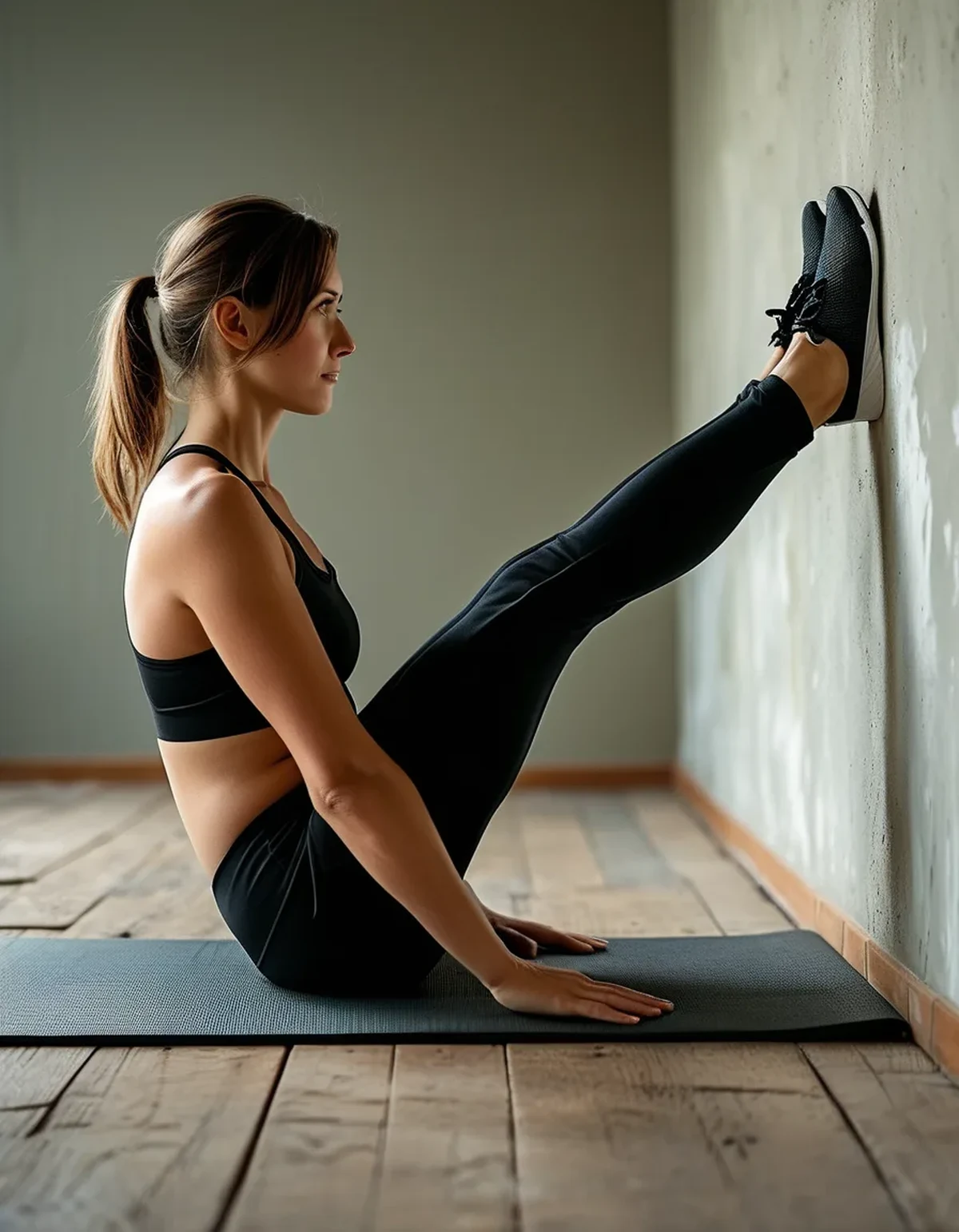
It is resistance training — your body is the resistance, and the wall is a load-adjuster. Pressing a foot into the wall in a glute bridge, holding a wall sit, or running wall knee-drives loads muscle exactly the way muscle adapts to: tension, held and repeated near effort. For an untrained or detrained body, that stimulus is comfortably above threshold, which is why the first two months produce honest strength gains.
What improves, specifically:
Core function, disproportionately. Pilates’ signature — slow, controlled, breath-linked core work — builds the deep trunk strength and control that shows up as easier posture, steadier balance, and a back that complains less about ordinary life.
Glutes and legs, from wall sits, bridges, and single-leg variations. Beginners commonly progress from a shaky 20-second wall sit to a solid minute-plus within weeks — that is strength adaptation, plainly visible.
Control and body awareness, the underrated one. Moving slowly with intention teaches you where your body is and how to own a position — the skill that makes every future form of exercise safer and faster to learn.
Joint-friendly consistency. Because it is low-impact, quiet, and equipment-free, it gets done — in an apartment, in grippy socks and leggings, in twenty minutes. The best program is famously the one that happens, and wall Pilates’ real superpower is a near-zero barrier to happening.
Who it is fully enough for right now: true beginners, postpartum and post-break returners easing back, anyone whose current alternative is nothing, and anyone whose goal is feeling capable and mobile rather than maximal strength.
Where is the ceiling, and how do you know you’ve hit it?
Strength grows only while challenge grows. The wall’s challenge tops out — and your body will tell you exactly when.
The principle that governs everything: progressive overload. Muscles adapt to demands slightly beyond current capacity, then need the demand raised again. Bodyweight work raises demand through leverage, range, tempo, and single-limb versions — a real ladder, but a finite one. Once you own the hardest variation at slow tempo, the stimulus stops climbing while you keep adapting.
Signs you have cleared the ceiling:
Sessions that once left you shaking now feel like maintenance. Pleasant is lovely; pleasant is not progressing.
Reps drift upward past ~20 without difficulty. Very high-rep sets keep building endurance, but the strength stimulus per set has thinned.
Visible or functional change has plateaued despite unchanged consistency — the classic month-four report.
What the wall also cannot fully cover, at any level:
Heavy-load bone stimulus. Bone responds best to substantial loading and impact. This matters more every year — especially for women approaching and past menopause, where resistance training with meaningful weight is one of the best-supported bone-density defenses. Wall work helps; it does not replace that.
Pulling strength. Walls let you push and hold, but rows and pulls — half of a balanced back-and-posture equation — barely exist in the format.
Top-end strength for life’s heavy moments — the suitcase, the toddler, the furniture. Grinding a genuinely heavy thing off the floor is its own trained skill.
None of this is a flaw in wall Pilates. It is what any single tool looks like when audited honestly.

How do you keep progressing — with or beyond the wall?
Climb the bodyweight ladder first. Then add small load. Then, ideally, add one real resistance day.
Stage one: squeeze the format (weeks 1 through 8+).
Slow everything down. A 4-second lower on every bridge and squat multiplies difficulty for free — tempo is the most underused dial in home training.
Go single-sided. One-leg glute bridges, single-leg wall sits, staggered work — unilateral versions roughly double the load per limb and expose the weak side.
Shrink your leverage advantage. Feet further from the wall, longer levers, deeper ranges, pauses at the hardest point.
Stage two: bring small load to the same movements.
A pair of dumbbells or a set of resistance bands, added to the exact routines you know: a dumbbell on the hips in wall bridges, a banded wall squat, band rows anchored in a door — rows especially, because they add the missing pull. This stage extends the format by months and costs less than a legging.
Stage three: one to two dedicated strength days.
Keep wall Pilates as your control-and-core practice — it stays valuable forever — and add one or two weekly sessions built on loaded basics: squats or split squats, a hinge, a press, a row. This hybrid is, frankly, the best version of the whole plan: Pilates control plus progressive load covers strength, bone, posture, and longevity better than either alone.
Whatever stage you are in, keep score. Log the wall-sit seconds, the rep quality, the tempo. Progress you can see is progress you continue.
This is general fitness guidance, not medical advice. If you are postpartum, managing injury, or have osteoporosis, get personal clearance on loading choices.
Myth vs Fact: Wall Pilates Claims
Myth: Wall Pilates is not real strength training. Fact: Bodyweight under controlled tension is genuine resistance training, and beginners gain measurable strength from it. The honest caveat is duration: it is real training with a finite runway, not fake training.
Myth: A 28-day wall Pilates challenge transforms your body. Fact: Four weeks of consistent work builds noticeable control, endurance, and the beginnings of strength — and visible recomposition takes months of progressive challenge plus nutrition. The habit the challenge builds is worth more than the before-after it promises.
Myth: Pilates makes muscles long and lean instead of bulky. Fact: Muscles do not lengthen from exercise style, and accidental bulk is vanishingly hard to achieve for anyone — it requires heavy progressive loading, surplus eating, and years. The lean look people credit to Pilates is modest muscle plus posture.
Myth: If it does not hurt the next day, it did not work. Fact: Soreness tracks novelty, not effectiveness. A quiet-next-day session that progressed your tempo or leverage did more than a random soreness-generator.
Myth: The wall is just a gimmick surface. Fact: The wall is a legitimately useful constraint — instant feedback on alignment, a load-adjuster for angles, and support that lets shaky beginners own positions early. Gimmick marketing, useful tool.
FAQ: Wall Pilates Strength Questions, Answered
How long will I see progress from wall Pilates alone?
Typically two to four months of honest gains for a beginner, longer if you aggressively use tempo, single-leg versions, and leverage progressions. When sessions stop feeling challenging and reps sail past twenty, the ceiling has arrived.
Can wall Pilates replace weight training for bone health?
Not fully. Bone adapts best to substantial load and impact, which wall work cannot deliver at the needed intensity — a particular consideration for women in and after perimenopause. Keep the Pilates; add load for the skeleton.
What single purchase extends the format longest?
A set of resistance bands with a door anchor. They add the missing pulling movements and raise the ceiling on every wall exercise you already do, for the price of a nice water bottle.
Is doing wall Pilates every day too much?
Generally fine, because intensity is moderate — alternate harder and gentler sessions and let one or two days be mobility-focused. If you add loaded strength days, keep roughly 48 hours between hard sessions for the same muscles.
TL;DR:
- Wall Pilates is real strength training for beginners and returners — expect two to four months of honest gains in core, glutes, and control.
- Strength stalls when challenge stalls: pleasant sessions and 20+ easy reps mean you have cleared the format’s ceiling.
- Extend it with tempo, single-leg versions, and leverage first; then bands and small dumbbells; ideally add one or two loaded strength days for bone and pulling strength.
- The hybrid — Pilates control plus progressive load — beats either alone and is the actual long-term answer.
Add a 4-second lower to every rep of tonight’s session. If that feels new, you have months of runway left; if it does not, it is band-shopping week.
See It in Motion
Seen here: High Waist Yoga Leggings with Side Pockets — shop it on bubblelime.com
Keep Reading
This article is for general informational and styling purposes only. Fit, sizing, and product availability may vary.