Why Wall Pilates Progress Stalls Around Week Three
Quick Answer: Wall pilates progresses fast at first because the wall supplies feedback and stability that lets you find the right positions quickly. Once your body knows the positions, the wall stops being a teaching tool and starts being a support that reduces the work. Progress resumes when you add time under tension, range, or leverage - not more repetitions.
Two weeks in, you could feel things working that had never worked before. Week four, the same routine feels like maintenance and nothing much is changing.
This is the most predictable pattern in wall pilates and it has a specific cause. The wall was doing something valuable that it has now finished doing.
Why is early progress so fast and then not?
Because the first phase of any movement practice is mostly learning, and learning happens quickly.
Early gains are neural, not muscular. In the first few weeks your nervous system gets better at recruiting the right muscles in the right order. Nothing has grown yet, and you are already noticeably better at the movement. This is real and it is fast.
The wall accelerates that phase specifically. It gives you a fixed reference for alignment, tactile feedback about whether your back is where you think it is, and enough stability that you can concentrate on the muscle you are targeting rather than on not falling over. For learning positions, it is genuinely excellent.
Then the learning phase completes. Your body knows the positions. At that point the wall stops teaching and starts assisting - it is holding some of the load and providing stability you no longer need.
And your routine has stayed the same. A fixed set of exercises, done for the same time, at the same range, with the same support, is by definition a maintenance stimulus once you have adapted to it. Bodies change in response to a demand that exceeds what they are used to, and the routine stopped exceeding it around week three.
So the plateau is not a failure. It is the correct and expected end of phase one.
What does progression actually look like here?
Four levers, in rough order of how easy they are to apply at home.
Time under tension is the first and best. Holding a wall sit for sixty seconds instead of thirty, or slowing a bridge to a four-second lift and a four-second lower, increases the demand substantially without any equipment. Slowing down is the most underrated progression in all of pilates.
Range of motion is the second. Moving further through the position - a deeper bridge, a fuller leg extension, more range on a roll-down - increases the work and the mobility benefit at once.
Leverage is the third and it is where the wall matters. Moving your feet further from the wall, or your hands lower on it, changes the angle and the load dramatically. This is how you use the wall as a variable rather than a constant.
Removing support is the fourth. Single-leg versions, or the same exercise without the wall entirely. This is the graduation step and it is where a lot of people find their real strength gaps.
Load is the fifth, and it is available at home cheaply - ankle weights, a resistance band, or a heavy book on the hips for a bridge.
The general rule: change one variable at a time and hold everything else constant, so you know what produced the change. Adding a new exercise is usually the least effective option, because a new movement returns you to the learning phase rather than progressing the one you have already learned.

5 Mistakes That Keep the Plateau in Place
1. Adding more repetitions instead of more difficulty. Going from fifteen reps to thirty at the same intensity builds a small amount of endurance and very little else. Ten harder repetitions beats thirty easy ones almost every time.
2. Collecting new routines instead of progressing one. A new video every day feels productive and keeps you permanently in the beginner phase of every movement. Running the same session for four to six weeks, getting harder each week, is what actually changes.
3. Using the wall for everything. By week three, some exercises should be leaving the wall entirely. If every movement in your session still involves it, you are still training with training wheels.
4. Rushing the tempo. Faster reps use momentum, and momentum is the enemy of pilates. The exercises that feel easy usually feel easy because they are being done at speed.
5. Ignoring the rest of the picture. Pilates is excellent for control, core strength, and mobility, and it is not a complete program. If progress across the board matters to you, some resistance training and some cardiovascular work belong alongside it.
The thread through all five: difficulty, not novelty or volume, is what moves a plateau.
How should you restructure the next four weeks?
As a block with a deliberate direction, rather than a routine you repeat.
Pick five or six exercises and keep them. Familiar movements are the ones you can progress, because you can measure them.
Week one: slow everything down. Same exercises, four-second tempo in each direction, fewer repetitions. This alone will make a familiar session feel new.
Week two: extend the holds. Add fifteen to thirty seconds to every isometric position - wall sits, bridges held at the top, planks.
Week three: change the leverage. Feet further from the wall, hands lower, longer levers wherever the exercise allows.
Week four: remove support on the two exercises that feel easiest. Single leg, or off the wall entirely.
Then reassess and repeat with the new baseline. A four-week block with a clear variable each week produces measurable change; a routine done indefinitely produces the plateau you already have.
Write down what you did. Reps, tempo, hold times, foot distance. Home training without any record is how people repeat the same session for months while believing they are progressing - and it is the single habit that separates people who keep improving from people who stall.
And keep some consistency in the rest of your week. Autumn tends to reduce incidental daily movement sharply as the weather turns, and a pilates session in an otherwise sedentary day is doing more work than the same session in an active one.
This is general fitness information rather than personal instruction. If you are working around an injury, pregnancy, or a medical condition, get guidance from a qualified instructor or clinician who can see you move.
FAQ: Wall Pilates Progression Questions, Answered
How do I know when to leave the wall?
When you can perform the movement with the wall while maintaining perfect alignment for the full set without needing the feedback. If the wall is only reminding you of something you already know, it is now assistance rather than instruction.
Is it bad to keep using the wall long term?
Not at all - some exercises are wall exercises by design and remain valuable. The problem is only when everything stays wall-supported, because that caps how much load you can eventually handle.
How often should I change my routine?
Every four to six weeks, and change the difficulty within that block rather than swapping the exercises. Changing exercises weekly keeps you in the learning phase permanently.
Should I be sore after a session?
Some mild soreness after a genuinely harder session is normal, and it is a poor measure of quality. Control, range, and how the movement feels a day later are better indicators than how sore you are.
TL;DR:
- Fast early progress is neural learning, and the wall accelerates it by providing feedback and stability - which is exactly why it has less to offer once you have learned.
- Progress with tempo, hold time, range, leverage, and support removal rather than with more repetitions or new routines.
- Run one set of five or six exercises for four to six weeks and change a single variable per week.
- Write down reps, tempo, and foot distance, or you will repeat the same session for months without noticing.
The wall did its job in the first fortnight. Week three is not the plateau - it is the point where it hands the work back to you.
See It in Motion
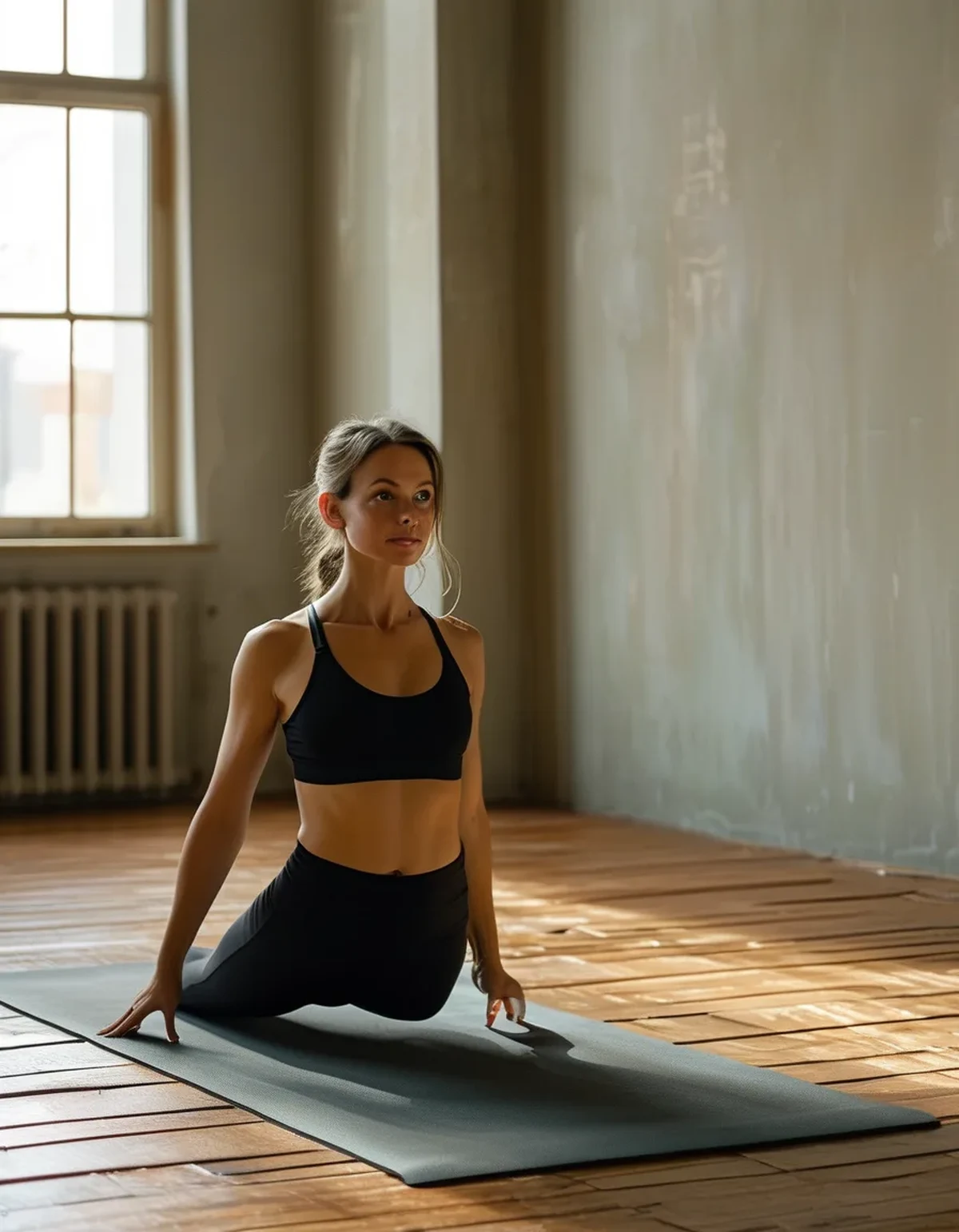
Seen here: Bootcut Capri Yoga Pants with Pockets — shop similar styles on bubblelime.com
Keep Reading
This article is for general informational and styling purposes only. Fit, sizing, and product availability may vary.