Why Wall Pilates Feels Different (and Less Safe) on Carpet vs Hardwood
Quick Answer: Hardwood floors let feet slide too easily during wall Pilates leg work, risking loss of control mid-exercise, while thick carpet can grip too much and strain the ankle during rotational movements — a thin mat or grippy socks on hardwood, and a firm-pile rug check on carpet, both correct for this.
The same wall Pilates routine that felt stable in one room can feel wobbly or oddly resistant in another, and the wall isn’t the variable — the floor under your feet is.
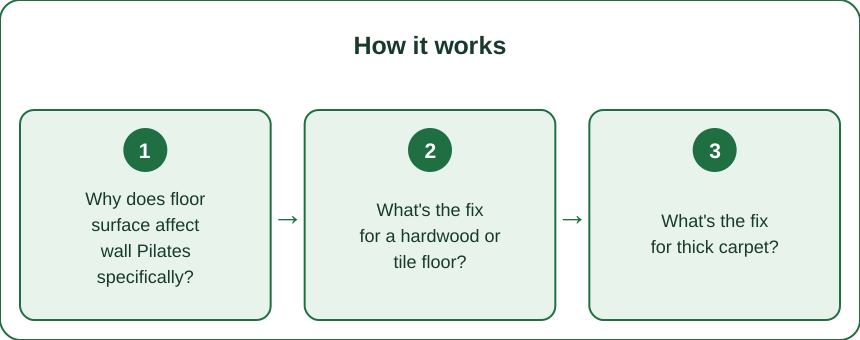
Why does floor surface affect wall Pilates specifically?
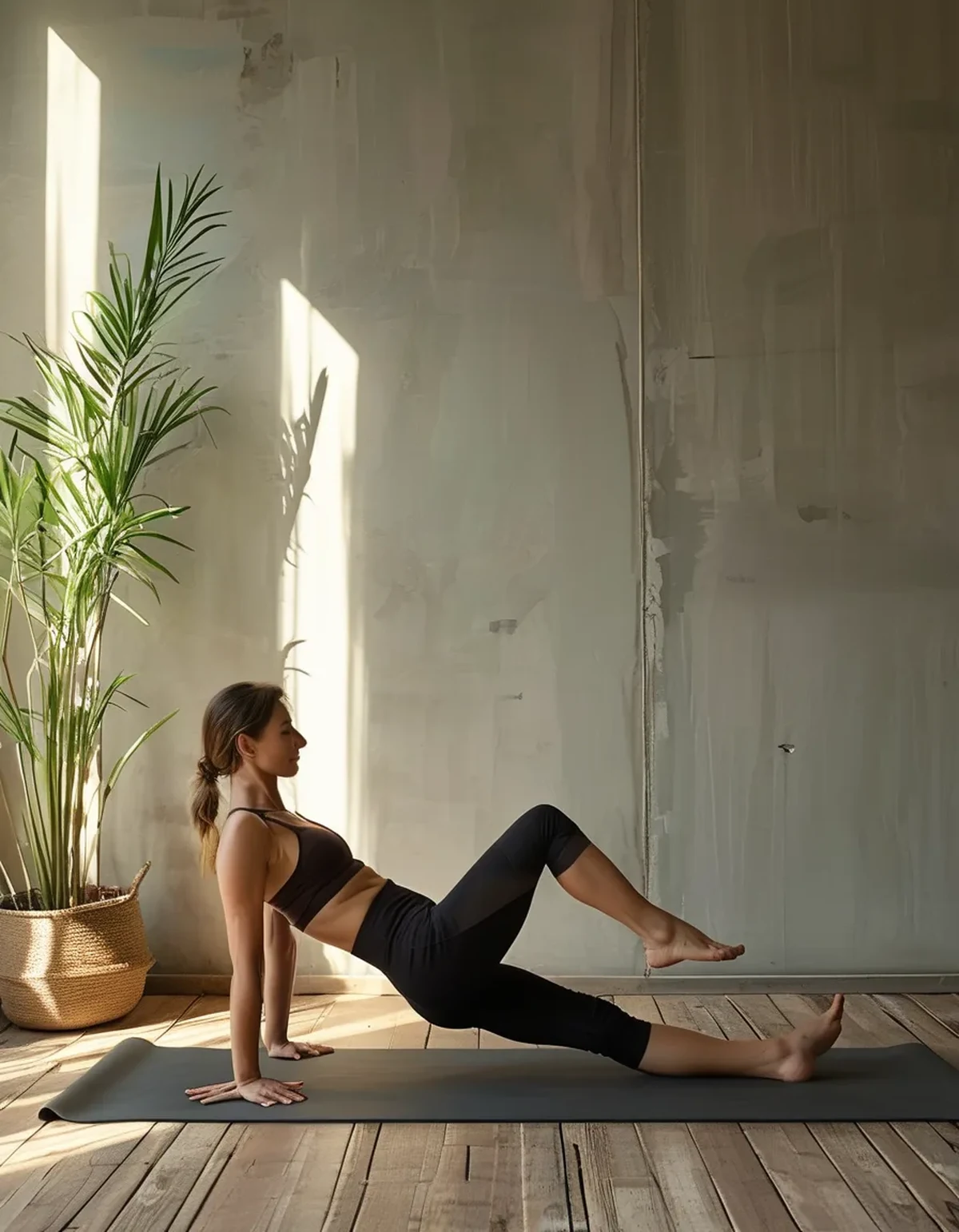
Many wall Pilates moves involve sliding, pressing, or pivoting the feet against the floor while the back stays anchored to the wall — leg slides, wall sits with foot adjustments, and rotational core moves all depend on the feet having predictable, consistent friction. Hardwood or tile offers very low friction, which can let a foot slide further or faster than intended mid-movement, undermining the controlled tension the exercise is meant to build.
Thick, plush carpet does the opposite — it can grip the foot so much that rotational or pivoting movements twist the ankle and knee instead of sliding cleanly, creating joint strain in exercises that were never meant to have that much resistance at the foot.
What’s the fix for a hardwood or tile floor?
A thin, non-slip yoga mat placed under just the feet (not the whole body) gives enough grip to prevent uncontrolled sliding while still allowing the small, deliberate foot movements many wall Pilates exercises call for. Grippy yoga socks with silicone dots on the sole are a lighter-weight alternative that work well for barefoot preference without a mat’s bulk.
What’s the fix for thick carpet?
Placing a thin, firm-surface mat or even a smooth board over the carpet at the foot area reduces excess grip for pivoting movements, essentially creating a more hardwood-like surface locally without needing to move rooms. For carpet that’s low-pile and firm rather than plush, this is often unnecessary — the issue scales with carpet thickness and softness, not carpet presence alone.
What Nobody Tells You About Wall Pilates Floor Setup
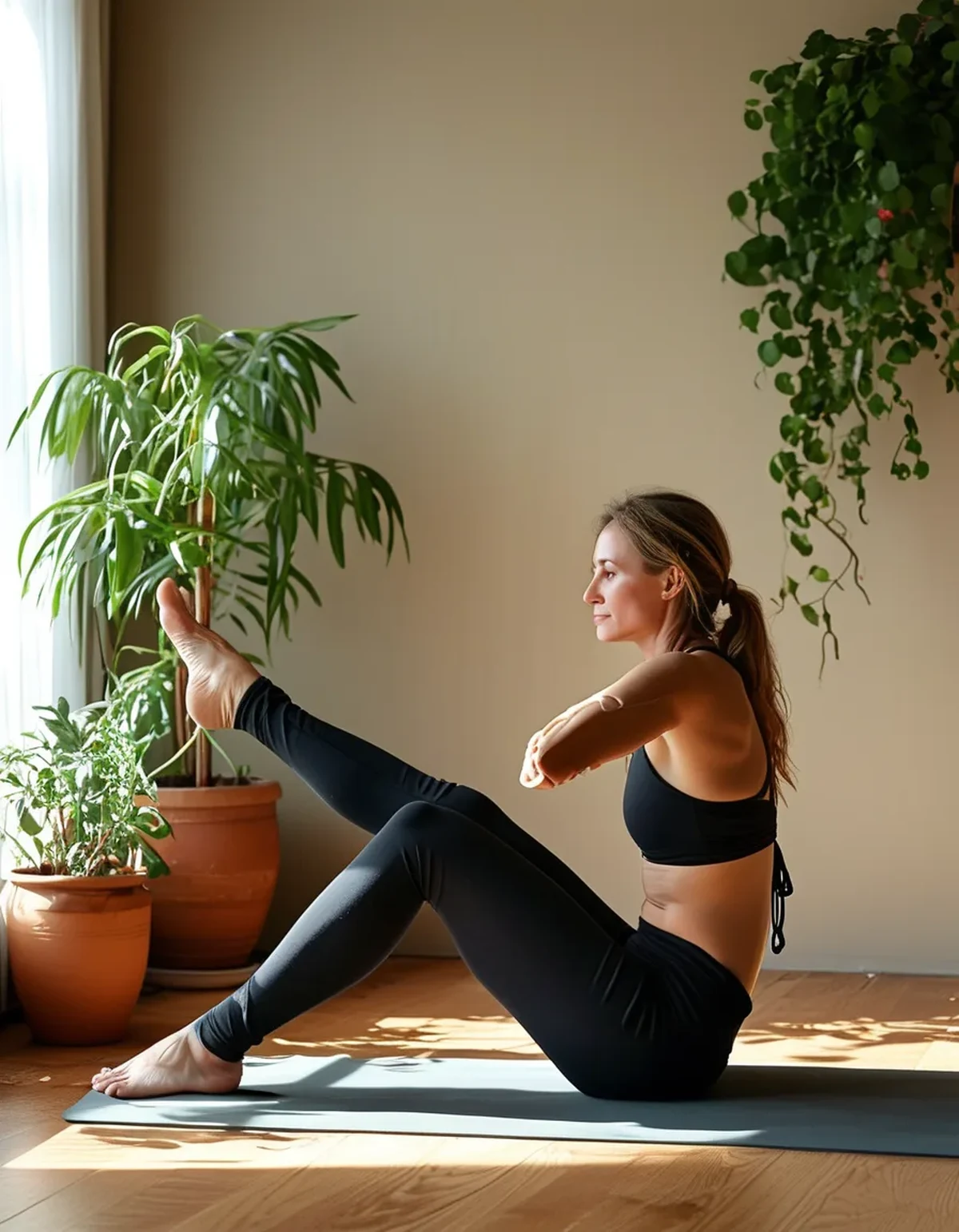
Most wall Pilates guides focus entirely on wall contact points and body alignment but rarely mention that foot-floor friction is an equally important, separate variable that changes exercise safety and effectiveness independent of form. You can have textbook-perfect wall contact and still get an inconsistent workout because of what’s happening at your feet.
It’s also rarely mentioned that socks alone (no mat, no grip) on hardwood is the single riskiest combination for slide-based wall Pilates moves — regular cotton socks on a smooth floor create almost no friction, turning a controlled slide into an uncontrolled one.
Does this matter more for beginners or advanced practitioners?
Beginners are more affected, since they’re still building the proprioceptive sense of how much control a movement should have — an unexpected slide or unexpected grip is more likely to be interpreted as personal instability rather than a floor-surface mismatch. More advanced practitioners tend to adjust instinctively, but even then, a surface mismatch adds unnecessary difficulty to moves that shouldn’t be harder than intended.
FAQ: Wall Pilates Floor Surface Questions, Answered
Does floor surface matter for wall Pilates moves that don’t involve foot sliding?
Less so — static holds like a basic wall sit are less floor-dependent than slide or pivot-based moves, though a stable, non-slip base is still generally preferable.
Is a full-size yoga mat necessary, or just something under the feet?
Just the feet is usually sufficient for wall Pilates specifically, since the back stays against the wall rather than the floor — a full mat is more relevant for floor-based Pilates work.
Can bare feet work well on any surface with the right technique?
Bare feet on a moderate-grip, non-plush surface (like short-pile carpet or a rubber mat) tends to work best — very smooth or very plush surfaces are where bare feet alone become a genuine limitation.
TL;DR:
- Hardwood and tile create too little friction for controlled foot slides in wall Pilates
- Thick, plush carpet can grip too much, straining ankles during pivoting moves
- A thin mat or grippy socks fix hardwood; a firm surface layer fixes plush carpet
- Beginners are especially likely to mistake a floor mismatch for their own instability
The wall isn’t the only surface that matters in wall Pilates — what’s under your feet quietly changes how safe and effective every slide and pivot actually is.
See It in Motion
Seen here: Racerback Tank Top - White — shop similar styles on bubblelime.com
Keep Reading
This article is for general informational and styling purposes only. Fit, sizing, and product availability may vary.