The Foot Placement Detail That Makes or Breaks Every Wall Pilates Move
Quick Answer: Most wall Pilates moves require your feet flat against the wall at hip-width, with a distance from the wall equal to roughly your shin length for bridge and leg-press style moves — too close collapses your lower back, too far removes the resistance the wall is supposed to provide. Getting this distance right changes how effective (and how safe) nearly every wall move feels.
You follow a wall Pilates video exactly and it either feels like nothing or strains your lower back. Foot placement — not effort — is usually the actual variable making the difference.
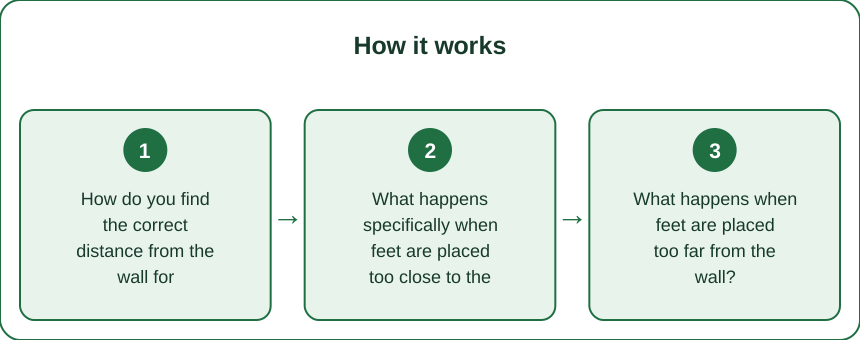
How do you find the correct distance from the wall for bridge-style moves?
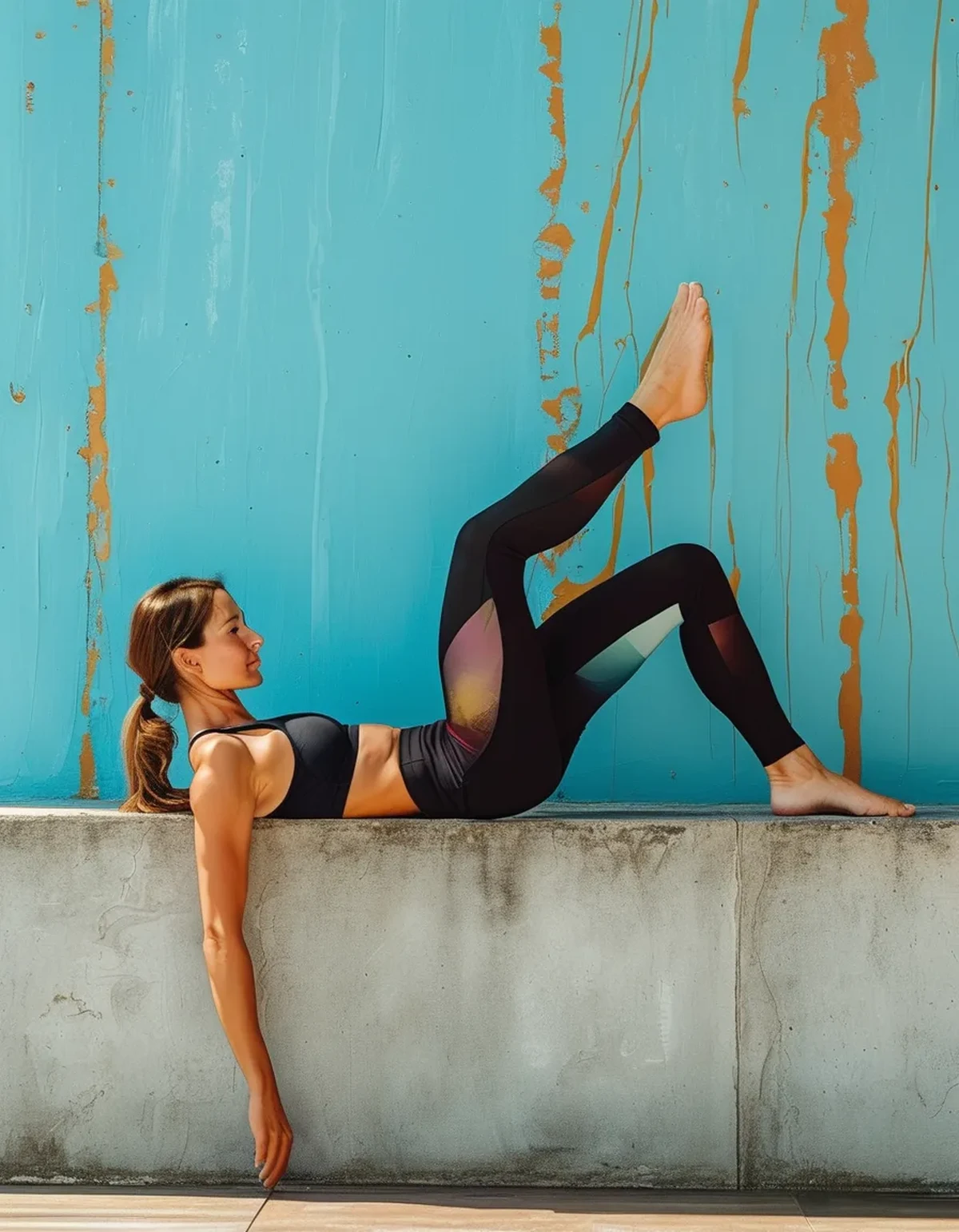
Lie down with your feet flat against the wall, knees bent to roughly 90 degrees — if your knees end up much sharper or much wider than a right angle, your feet are too close or too far, respectively. This shin-length distance is the starting reference point for most wall bridge, leg press, and glute-focused moves.
Adjusting an inch or two from this baseline is normal for different body proportions, but starting from the 90-degree knee check prevents the two most common placement errors.
What happens specifically when feet are placed too close to the wall?
Feet too close forces your hips into a sharper fold, which tends to pull your lower back off the mat and out of neutral alignment during bridges and leg presses, shifting strain away from your glutes and into your lumbar spine. This is one of the more common causes of new lower back discomfort from wall Pilates routines.
If you notice your lower back arching or lifting off the mat during a bridge, that’s the signal to move your feet slightly farther from the wall, not to push through with more reps.
What happens when feet are placed too far from the wall?
Feet too far reduces the actual resistance and range of motion the wall is meant to provide, turning what should be a challenging press or bridge into a shallow, low-effort motion that doesn’t meaningfully engage the target muscles. This is the quieter mistake — it doesn’t cause pain, it just makes the workout far less effective than it looks.
If a wall Pilates move feels suspiciously easy compared to how it’s described, foot distance being too far is one of the first things worth checking.
Myth vs Fact: Wall Pilates Foot Placement
Myth: Foot placement is a minor detail that mostly affects comfort. Fact: It directly determines whether the target muscles are actually doing the work, or whether your spine is compensating instead.
Myth: The same foot distance works for every wall Pilates exercise. Fact: Different moves (bridges, leg presses, wall sits) each have their own ideal distance based on the joint angles they’re targeting.
FAQ: Wall Pilates Foot Placement, Answered
Does foot width against the wall matter as much as distance?
Yes — hip-width placement is the standard starting point for most moves; going narrower or wider changes which part of the glutes and inner or outer thighs gets emphasized.
Should foot placement change for wall sits specifically?
For wall sits, feet are typically placed farther out (roughly shin-plus-a-few-inches) so your knees stack over your ankles rather than your toes, which protects the knee joint.
How do I know if my foot placement is right without a mirror?
The best check is feeling for lower back contact with the mat during bridges — if your lower back stays gently pressed down through the movement, your placement is close to correct.
TL;DR:
- Start with feet at roughly shin-length distance from the wall, knees near 90 degrees
- Too close pulls your lower back off the mat and shifts strain to your spine
- Too far reduces resistance and makes the move look easy but do little
- Different moves (bridges, wall sits) have slightly different ideal distances
If a wall Pilates move feels either painful or suspiciously easy, foot placement is the first thing to adjust before changing anything else.
See It in Motion
Seen here: High Waist Bootcut Yoga Pants with Hidden Pocket — shop it on bubblelime.com
Keep Reading
This article is for general informational and styling purposes only. Fit, sizing, and product availability may vary.