Wall Pilates: Your Wall Is the New Reformer
Quick Answer: Wall pilates uses a wall as free equipment — it provides resistance to press against, honest alignment feedback, and support that unlocks positions you couldn’t balance in otherwise. Sessions run 15–30 minutes with a mat and a wall, nothing else. It’s a genuine entry point to pilates, not a reformer replacement, and the viral 28-day challenges work mainly as habit structure.
Every home fitness trend eventually asks you to buy something. Wall pilates asked you to use a wall.
That’s the whole insight, and it’s a surprisingly good one — because the wall does three jobs that expensive equipment usually charges for.
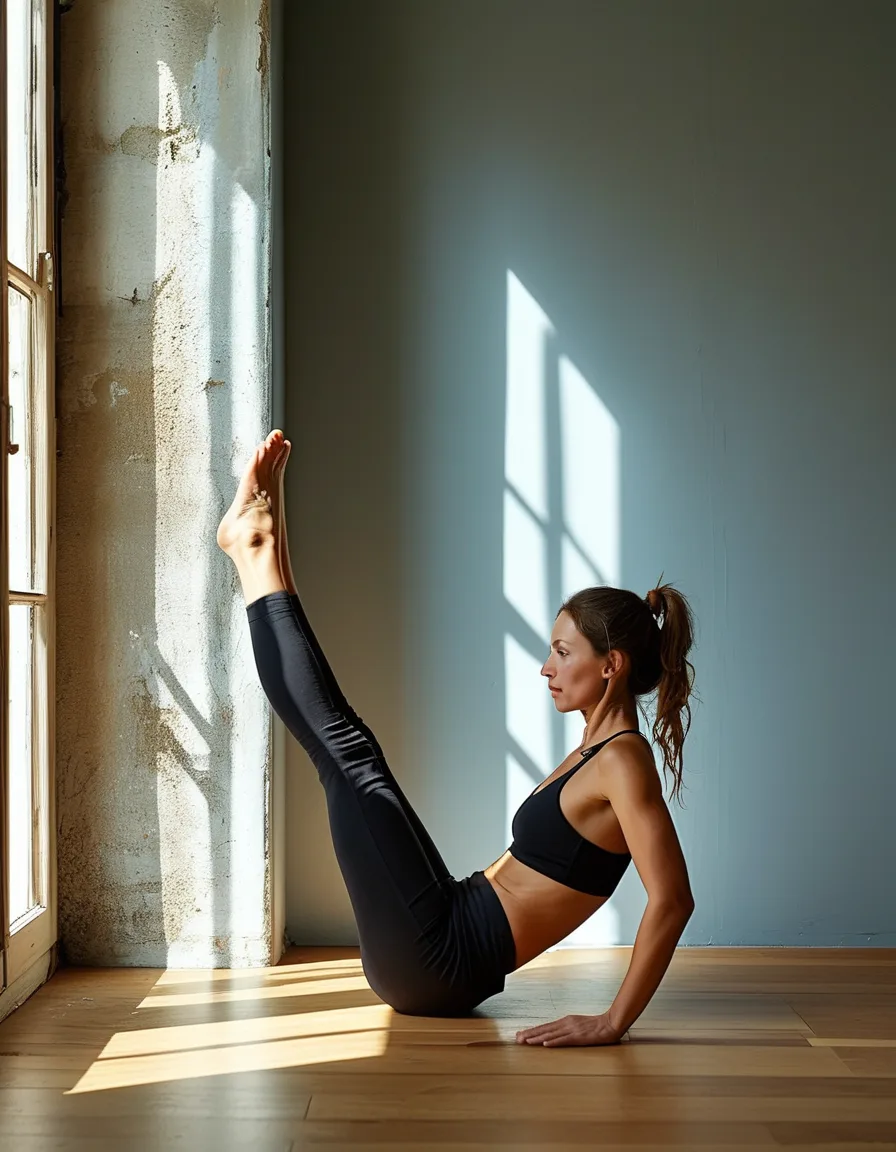
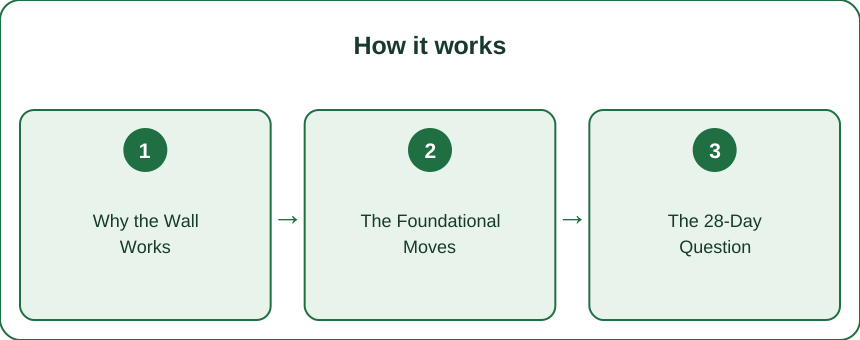
Why Does a Wall Work as Pilates Equipment?
It gives you something to press against. This is the closest thing to a reformer’s foot bar you’ll find for free. Lying on your back with your feet on the wall, you can load your legs and glutes through pilates-style ranges with real resistance, controlled entirely by how much you push.
It tells you the truth about your alignment. A wall doesn’t negotiate. Stand against it and you immediately feel a tilted pelvis, a rounded upper back, or shoulders that don’t reach. It’s a posture mirror you can feel rather than one you have to look at — which is far more useful mid-movement.
It removes the balance problem. A lot of pilates work is limited by stability rather than strength. With the wall supporting you, you can do single-leg work, supported bridges, and deep stretches without your balance being the bottleneck. That’s what makes it genuinely beginner-friendly.
Free, silent, and already installed in every home. The accessibility is the entire engine behind the trend.
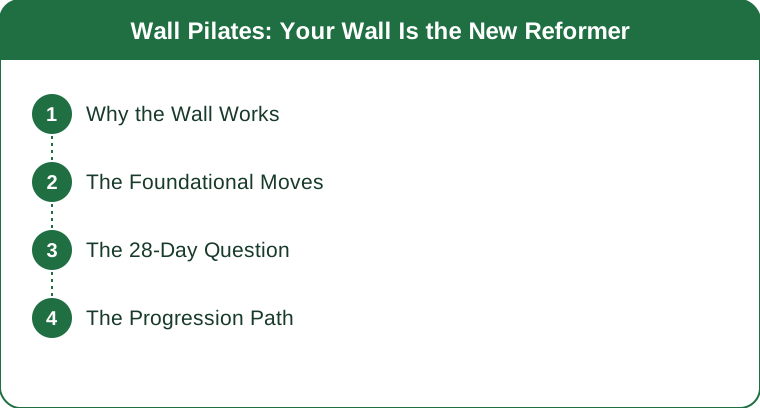
The Foundational Moves
Six movements make up most of what wall pilates is:
Wall sit — back flat against the wall, knees at 90 degrees. The pilates version adds breath control and heel raises. Hold 30–45 seconds, build toward 60.
Wall leg press — lying on your back, feet flat on the wall, knees bent. Press through the heels to extend, control back down. This is the reformer-echo move. 10–12 slow reps.
Wall bridge — same setup, feet on the wall, lift the hips. Loads glutes and hamstrings with the wall taking the balance work. 12 reps with a 2-second hold at the top.
Wall roll-down — standing with your back against the wall, articulate down one vertebra at a time and back up. The single best spine-mobility teacher on the list. 5 slow reps.
Wall push-up — hands on the wall, walk your feet back to increase difficulty. Infinitely scalable, which is why it’s the best push-up regression there is. 10–15 reps.
Legs up the wall — the recovery position. Lie on your back with legs vertical against the wall. 3–5 minutes at the end.
Sessions run 15–30 minutes, mat plus wall, and make no noise at all — which quietly makes this the best apartment workout going.
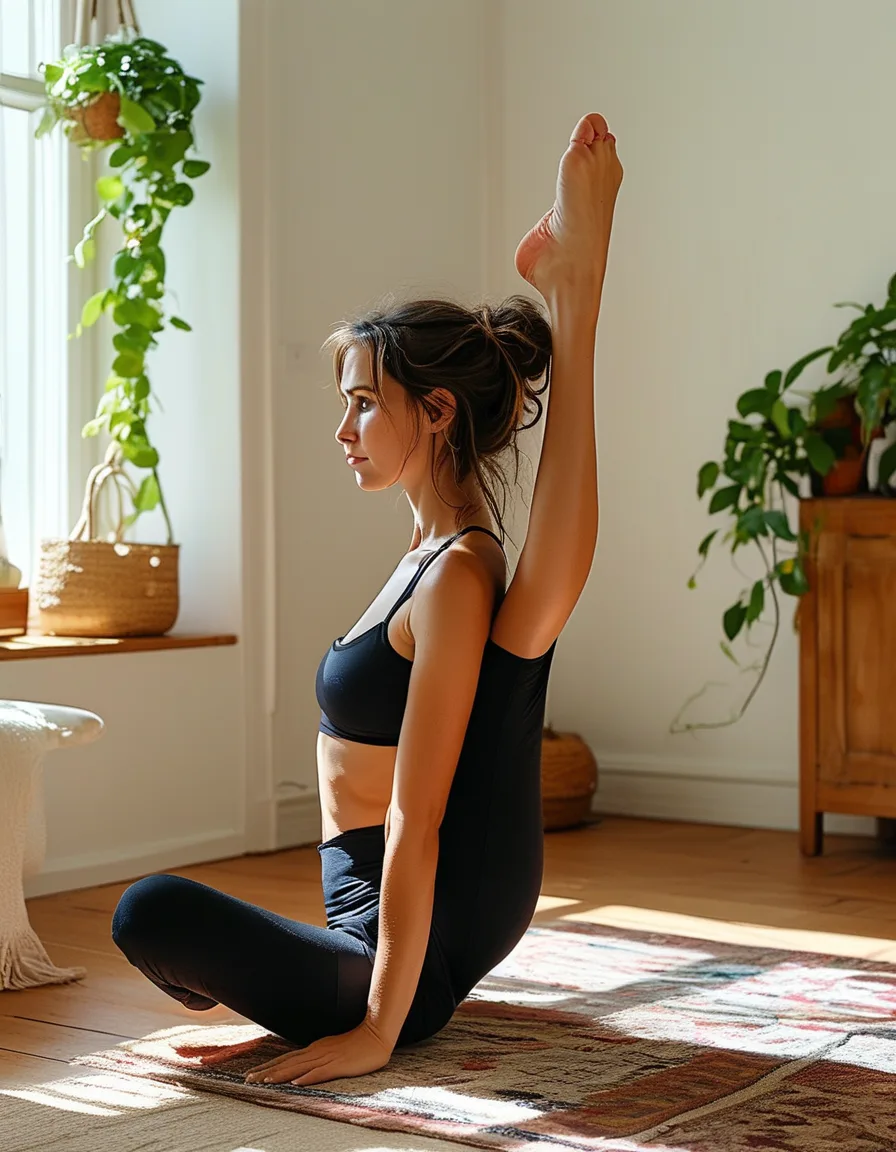
Myth vs Fact: The 28-Day Challenge
Myth: 28 days of wall pilates transforms your body. Fact: Four weeks of consistent core and glute work produces real but modest change — better posture, stronger glutes, noticeably better core control. The dramatic before-and-afters in the ads are selling a habit in costume.
Myth: It replaces a reformer. Fact: A reformer offers adjustable spring resistance across many planes. A wall offers your bodyweight and leverage. Wall pilates is an excellent entry point and a genuinely useful tool; it isn’t the same machine.
Myth: The challenge format is a gimmick. Fact: It’s the most useful part. Daily short sessions, visible progression, and completion psychology are exactly what beginners need to actually start. Take the structure and ignore the promises.
Myth: You need an app. Fact: You need six movements and 20 minutes. Apps are convenient for programming; they aren’t the workout.
Myth: It’s too easy to count as exercise. Fact: Do 12 wall leg presses with a 3-second lowering phase and report back. Tempo is what makes bodyweight work hard.
How to Progress (Because the Wall Plateaus)
The wall’s resistance is fixed — it’s your bodyweight and your leverage, and neither grows. That’s fine as long as you know the progression path:
1. Slow the tempo. A 3-second lowering phase on every rep. This is free and it’s the first thing to change.
2. Add pauses. A 2-second hold at the hardest point of each movement.
3. Lengthen the lever. Feet further from the wall on push-ups, straighter legs on presses. More leverage, more load.
4. Go single-leg. Half the support, double the demand. This is the biggest single jump available.
5. Add small equipment. Ankle weights and resistance bands extend the useful life of every move here by months.
6. Graduate. Mat pilates proper, or a studio reformer if curiosity funds it.
The wall stays in your rotation permanently regardless — as the alignment teacher and the recovery station. Free equipment never fully retires.
FAQ
Does wall pilates actually work?
Yes, for core strength, glute activation, posture, and mobility — particularly if you’re new to pilates or returning after time off. It’s a genuine workout that produces real if modest change over 4–8 weeks; it’s not the dramatic transformation the marketing implies.
How often should I do wall pilates?
Daily short sessions of 15–20 minutes work well because the intensity is moderate, which is why the 28-day format is structured that way. Three to four sessions a week is plenty if you’re also doing other training.
Is wall pilates good for beginners and seniors?
It’s one of the better options for both. The wall removes the balance requirement that limits a lot of floor and standing work, provides constant feedback on alignment, and every movement scales down easily. Anyone with a recent injury or a health condition should check with a professional first.
TL;DR:
- The wall provides resistance, alignment feedback, and balance support — three jobs, no cost.
- Six core moves: wall sit, leg press, bridge, roll-down, push-up, legs-up-the-wall.
- Sessions are 15–30 minutes, silent, and need only a mat.
- The 28-day challenges work as habit structure, not as transformation.
- Progress with tempo, pauses, longer levers, and single-leg work before adding equipment.
See It in Motion
Seen here: Super High Waist Embossed Yoga Leggings with Inner Pocket — shop it on bubblelime.com
Keep Reading
This article is for general informational and styling purposes only. Fit, sizing, and product availability may vary.