Why Your Hamstring Cramps During Wall Pilates Holds — and How to Stop It
Quick Answer: Hamstring cramping in a wall bridge or hold is usually the hamstring compensating for glutes that are not firing, combined with the muscle working in a shortened position where it cramps most easily. The fastest fixes are moving your feet closer to your body, pushing through your heels rather than your toes, and posteriorly tilting your pelvis before you lift. Hydration matters, but position matters more.
You are twenty seconds into a wall bridge hold, everything is fine, and then the back of your thigh grabs like it has been electrocuted and you are rolling around on the mat.
It is not a fitness level problem and it is usually not dehydration. The second section covers the three-second adjustment that fixes it for most people.
Why does the hamstring cramp instead of the glute working?
Because both muscles extend the hip, and your body will use whichever one it is more used to using.
Hip extension — driving your thigh backward, or lifting your hips in a bridge — is shared between the glute max and the hamstrings. In a well-balanced pattern, the glute does most of it. In most people who sit a lot, the glute is under-recruited and the hamstring picks up a disproportionate share.
The hamstring is smaller and it is already doing another job — controlling the knee. Asking it to be the primary hip extensor during a sustained hold puts it under continuous load in a position it does not love.
Then there is the length factor. Muscles cramp most readily when contracting in a shortened position. In a bridge with your feet close to your body, the hamstring is relatively shortened while being asked to contract hard — close to a textbook cramp setup.
Add a third factor: static holds are worse than movement for cramping. Continuous contraction restricts blood flow to the muscle and gives it no relaxation phase, which is why cramping in wall pilates shows up during the 30-second holds rather than during the reps.
The result is predictable: the muscle that is over-recruited, in a shortened position, held continuously, is the one that cramps.
What is the three-second fix mid-exercise?
Do these in order, and most people never get to the third.
Fix 1: Move your feet — and know which direction. This is the main one, and the direction depends on which exercise.
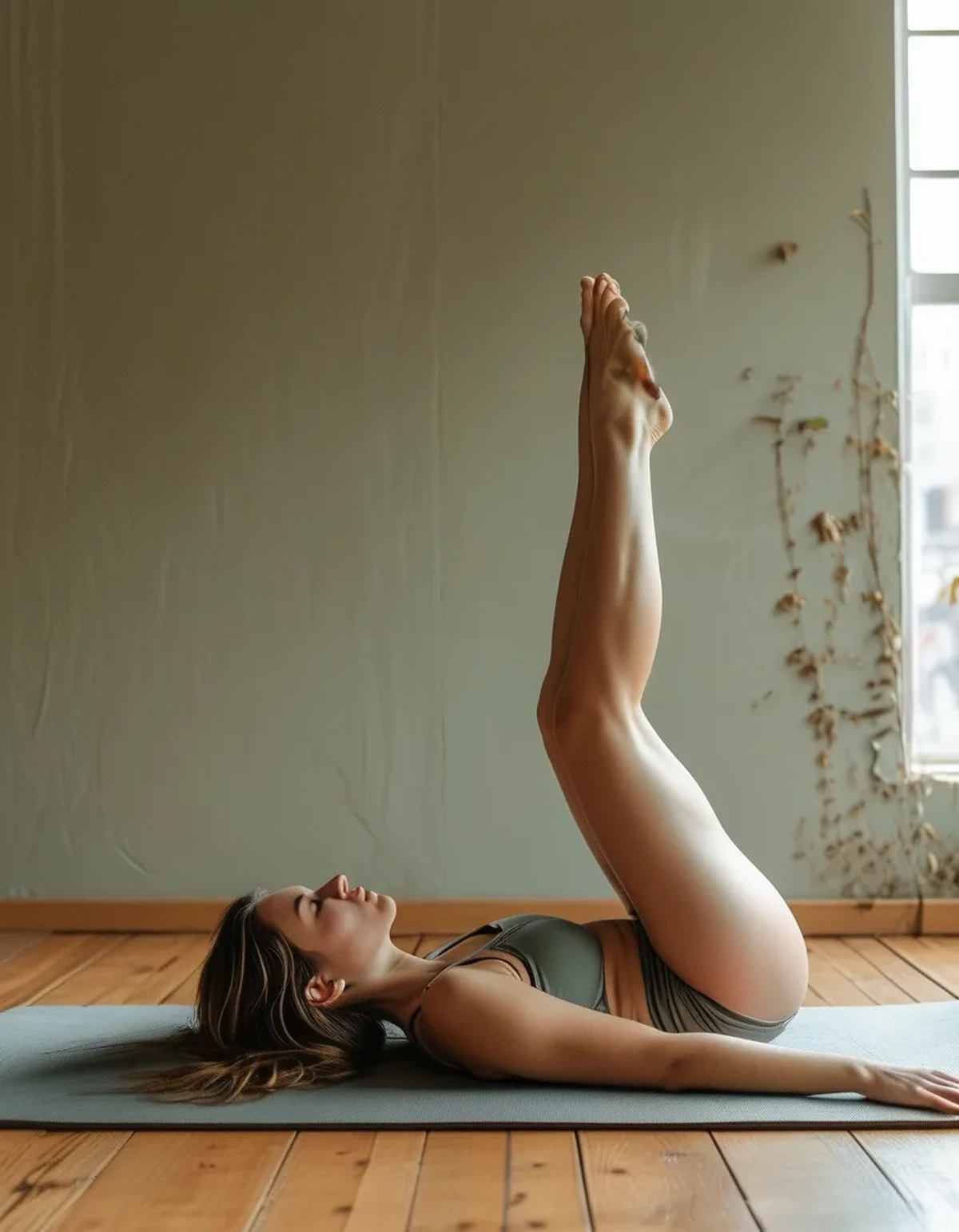
In a floor bridge with feet on the ground, move your feet closer to your hips. Feet far away puts the hamstring in a long, high-tension position and increases its share of the work. You should be able to just touch your heels with your fingertips.
In a wall bridge with feet on the wall, move your feet slightly lower on the wall so your knees are closer to 90 degrees rather than extended. Extended knees load the hamstring far more.
Fix 2: Push through your heels, not your whole foot. Driving through the heel biases recruitment toward the glutes; pushing through the ball of your foot or toes biases it toward the hamstrings and calves. Try lifting your toes slightly inside your shoes or off the mat — it is a surprisingly effective cue.
Fix 3: Tilt your pelvis before you lift. Tuck your tailbone slightly, flattening your low back into the mat, and squeeze your glutes before your hips leave the ground. This pre-activates the glute so it starts the movement rather than joining halfway through. Most people lift first and squeeze second, which lets the hamstring take the initiation.
If it cramps anyway: straighten the leg and gently draw your toes toward you. Lengthening the muscle stops the cramp faster than massaging it. Then resume with your feet closer in.
What makes cramping more likely across a whole session?
The setup factors that turn an occasional cramp into every session.
A cold start. Wall pilates often begins on the floor with no general warm-up, which means your first sustained hold is happening in tissue that has not moved. Three minutes of walking or marching before you start meaningfully reduces cramping.
Doing holds before activation work. If your session opens with a 45-second bridge hold, you are asking for coordinated glute recruitment from a system that has not been switched on. Order matters: short activation reps first, sustained holds second.
Very long holds too early in a progression. Build hold time gradually — 15 seconds, then 20, then 30 — rather than jumping to a minute because the video says so.
Electrolyte and hydration status. It genuinely does contribute, particularly in late summer heat or if you train in the morning after a night of not drinking. The evidence for pure dehydration causing exercise cramps is weaker than the popular version suggests — current thinking leans toward neuromuscular fatigue as the primary driver — but low sodium status is a real contributor for heavy sweaters. It is a factor, not the explanation.
Previously strained hamstrings cramp more. If you have a history of hamstring injury on one side, expect that side to be more prone and to need shorter holds for longer.
Doing wall pilates immediately after a hard leg day. Fatigued muscle cramps more readily. Separate heavy lower body training from long-hold sessions by a day if you can.
Myth vs Fact: cramping during pilates
Myth: Cramping means you are dehydrated.
Fact: It is a contributor, not usually the cause. The dehydration explanation is popular partly because drinking water is easy advice. Research increasingly points to altered neuromuscular control and muscle fatigue as the primary mechanism in exercise-associated cramping. If you cramp in the same exercise, in the same position, every time, and never in others, that is a position and recruitment issue — no amount of water changes it.
Myth: Cramping means the muscle is weak.
Fact: Cramping often means the muscle is over-recruited, which is the opposite. Your hamstring is cramping because it is working too hard, not too little. The muscle to strengthen is the glute.
Myth: You should stretch the hamstring more.
Fact: Stretching a cramping muscle relieves the cramp; stretching it more overall does not prevent the next one. If the underlying issue is recruitment, more flexibility does not change who does the work. Glute activation work does.
Myth: Push through it and it will go away.
Fact: Continuing to contract a cramping muscle prolongs the cramp and leaves it sore for days. Stop, lengthen, adjust position, resume. A cramp that you fought through often leaves a tender spot that lasts longer than the session was worth.
FAQ: Wall Pilates Cramping Questions, Answered
Should I add glute strengthening outside of pilates?
Yes, and it is the durable fix. Two short sessions a week of glute-focused work — bridges with a pause, hip thrusts, banded lateral walks, or step-ups — changes the recruitment pattern within a few weeks. Wall pilates then stops feeling like a hamstring workout by accident.
Is it normal to cramp in the foot instead?
Yes, and usually for the same reason. Foot and calf cramping in bridges typically means you are pushing through your toes rather than your heels, often because your feet are too far from your body. Move the feet in and consciously press through the heel.
When should I be concerned about cramping?
Occasional exercise cramps in a predictable position are common and benign. Cramping that happens at rest, wakes you at night regularly, comes with numbness or weakness, or has appeared suddenly without a change in training is worth discussing with a healthcare provider — it can occasionally reflect medication effects or an underlying issue. This is general information, not medical advice.
TL;DR:
- Hamstring cramping in holds is usually the hamstring covering for glutes that are not firing.
- Move your feet closer to your hips, push through your heels, and tuck your pelvis before you lift.
- Warm up for three minutes, do short activation reps before long holds, and build hold time gradually.
- Hydration and sodium contribute but rarely explain a cramp that happens in one specific position every time.
- The durable fix is glute strengthening twice a week, not more hamstring stretching.
What makes this one satisfying to fix is how immediate the feedback is. Move your feet four inches, press through your heels, and the exercise that has been cramping you for weeks suddenly works the muscle it was always supposed to work — which usually also means you finally feel it in your glutes the next day.
See It in Motion
Seen here: UPF 50+ Racerback Yoga Tank Top — shop it on bubblelime.com
Keep Reading
This article is for general informational and styling purposes only. Fit, sizing, and product availability may vary.