Wall Pilates and Lower Back Pain: When It Helps and When It Is the Wrong Tool
Quick Answer: Wall-supported Pilates helps lower back discomfort mainly because the wall removes load and provides feedback — it holds part of your body weight, gives your spine a reference surface, and makes it obvious when your position has drifted. That makes it a good tool for gentle movement, controlled core work, and hip mobility. It is the wrong tool for acute severe pain, for any pain with leg symptoms, and for aggressive stretching into a painful range.
Use the wall to take load off. The moment it is adding load to a sore back, stop.
Why does a wall help a sore back at all?
Three reasons, and none of them are about strengthening.
It removes load. With your legs supported on a wall, the wall carries weight your hip flexors and lower back would otherwise hold. For a back that hurts, reducing load is the mechanism that matters most, and it is why legs-up-the-wall feels so good to so many people.
It provides proprioceptive feedback. You cannot see your own lumbar spine. Pressed against a wall or a floor, you can feel exactly where it is — whether the low back is arched away or flat — which is the single hardest thing to learn in core work.
It constrains the movement. Bad reps happen when a joint drifts out of position without you noticing. A wall physically prevents a lot of that drift, which makes wall exercises unusually beginner-safe.
Movement itself helps most back pain. Current guidance for common non-specific low back pain strongly favours staying active and returning to normal movement over rest. Gentle, controlled movement is the treatment, and the wall makes gentle and controlled easy to achieve.
What it is not doing is fixing a structural problem. Wall Pilates does not realign anything, and the useful effect comes from load management, gentle movement, and improved control — which is plenty.
Which wall exercises actually suit a sore back?
The supported and controlled ones. Not the demanding ones.
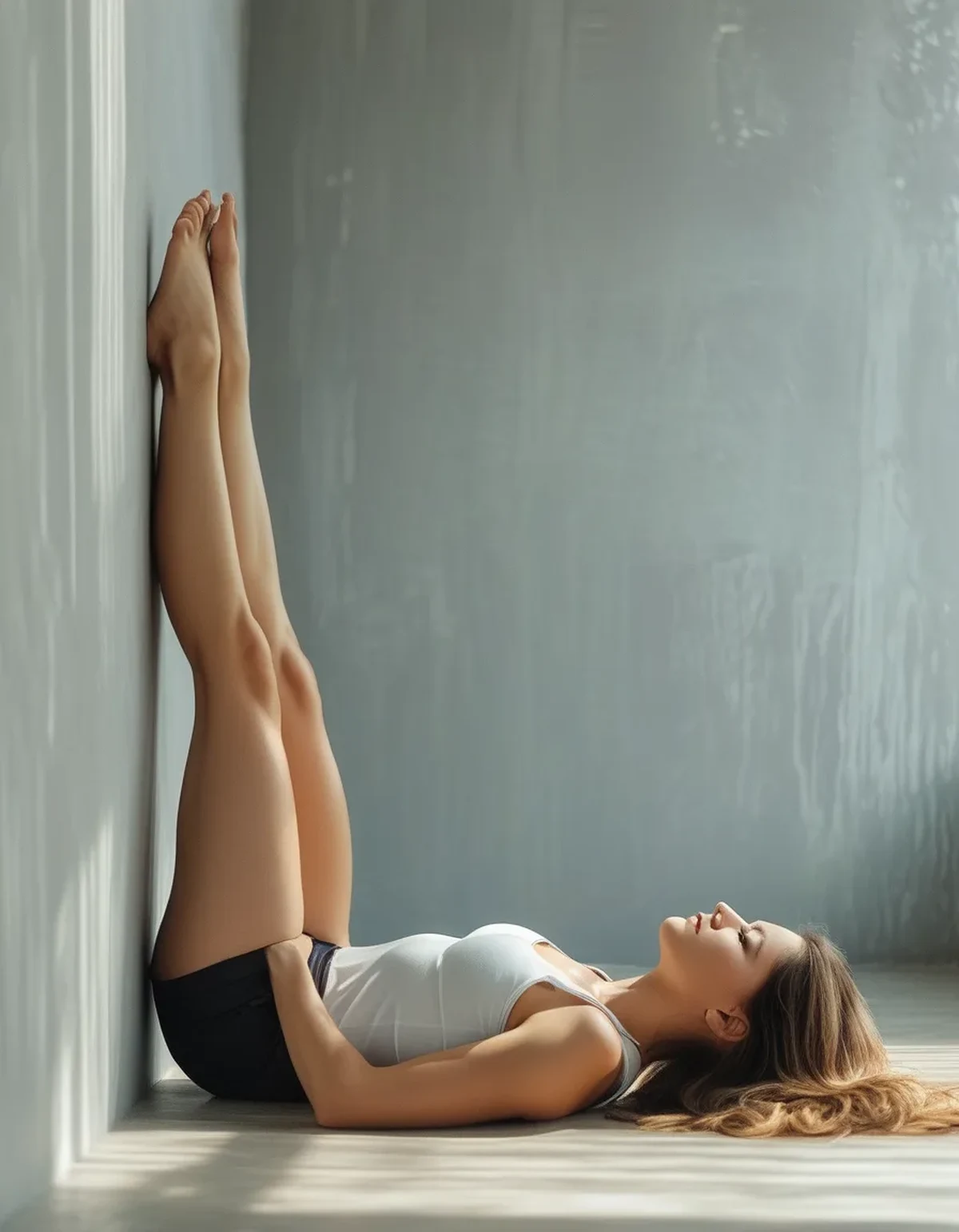
Legs up the wall. Lie on your back, legs resting vertically against the wall, hips a comfortable distance from it. The wall holds the entire weight of your legs, which unloads the lower back completely. Five minutes, breathing slowly.
Wall-supported pelvic tilts. Lying on your back with feet flat on the wall and knees bent. Gently flatten the low back toward the floor, then release. Small movement, no force. This is where you learn what your lumbar spine is doing.
Wall bridge with feet on the wall. Feet on the wall at roughly knee height, lift the hips a few inches. Because the wall supports the feet, the range is naturally limited and it is far harder to overextend the low back than in a standard bridge.
Wall-supported dead bug. Hands pressing lightly on the wall overhead while lowering one leg at a time. The wall gives a stable anchor and immediate feedback if the back arches.
Standing wall roll-down. Back against the wall, roll down one vertebra at a time only as far as comfortable, then roll back. Gentle spinal mobility with the wall guiding the sequence.
Wall sit, but briefly and only if it feels fine. It loads the quads rather than the back, and it becomes a back exercise if you hold it long enough to start compensating.
Keep every one of them well within a pain-free range. The rule is that movement may feel like effort or gentle stretch and should not increase your pain.

5 Mistakes People Make Using the Wall for Back Pain
1. Chasing the stretch. Pushing hard into a hamstring stretch with legs on the wall pulls on the pelvis and can increase low back irritation. Gentle, held, and comfortable — never a stretch you have to breathe through.
2. Doing core work that arches the back. Any wall exercise where the lower back lifts away from the floor and you cannot control it is too advanced. If the back arches, regress the exercise immediately — bend the knee more, lower less far, do fewer reps.
3. Holding the breath. Breath-holding raises intra-abdominal pressure and increases tension throughout. Exhale on effort, always, and if you cannot breathe normally through a hold, it is too hard.
4. Treating soreness and pain as the same thing. Muscular effort that fades in a day is fine. Pain that increases during the session, or that is worse the next morning than before you started, means the choice or dosage was wrong.
5. Doing it every single day at full effort. More is not better for an irritated back. Short, frequent, easy sessions beat long, hard, occasional ones by a wide margin here.
When is the wall the wrong tool entirely?
There are clear situations where exercise choice is not the question.
Seek urgent medical care immediately if back pain comes with any of these: loss of bladder or bowel control, numbness in the saddle area between the legs, progressive weakness in the legs, severe pain following a significant fall or accident, or pain accompanied by fever and feeling unwell. These are emergency signs and no exercise programme is the answer.
See a doctor or physiotherapist before continuing if you have: pain radiating down a leg, numbness or tingling in the foot, pain that wakes you at night, pain that is not improving after several weeks, or a history of osteoporosis, cancer, or recent significant illness.
In acute severe pain, gentle movement within tolerance is generally recommended over bed rest, and this is exactly the moment to get individual guidance rather than follow a video.
Certain exercises need caution with specific conditions. Deep spinal flexion is often advised against with osteoporosis, and some positions are better avoided with certain disc problems. This is precisely the personalisation an online routine cannot provide.
Postnatal considerations apply too. Abdominal separation and pelvic floor recovery change which core exercises are appropriate, and wall work can be an excellent postnatal option with proper guidance on progression.
The practical rule for everything else: if a movement increases your pain during or after, it is not the right movement today. That is not a failure — it is the feedback the session exists to give you.
And know what good progress looks like. Slightly easier movement, a bit more range, less stiffness in the morning. Slow, unglamorous, and cumulative — which is what recovery from back pain generally looks like.
This is general information, not medical advice. Anyone with persistent, severe, or radiating back pain should be assessed by a qualified healthcare professional before starting an exercise programme.
FAQ: Wall Pilates and Back Pain, Answered
Can wall Pilates cure my back pain?
It is not a cure and it can be a genuinely useful part of managing common low back pain, because gentle controlled movement is well supported for exactly that. Persistent pain needs a proper assessment first.
Why does legs-up-the-wall feel so good on a sore back?
Because the wall carries the full weight of your legs, unloading the lower back and hip flexors completely. It is passive load removal rather than exercise, and that is exactly why it feels like relief.
How do I know if I am doing too much?
Compare the next morning to the morning before. Mild muscular soreness is fine; an increase in your actual back pain means the dose or the exercise choice was wrong.
Should I push through pain to build strength?
No. Effort and gentle stretch are acceptable; increasing pain is not. Regress the movement, reduce the range, or stop and get assessed if it keeps happening.
TL;DR:
- The wall helps a sore back by removing load, giving your spine a reference surface, and preventing positional drift.
- Legs up the wall, supported pelvic tilts, wall bridges, and wall roll-downs suit an irritated back; hard stretches and arching core work do not.
- Movement should feel like effort or gentle stretch and must not increase your pain during or after.
- Bladder or bowel changes, saddle numbness, leg weakness, or pain after a fall are emergency signs — get medical care immediately.
Start with five minutes of legs up the wall and nothing else. If that feels good, you have found your starting point.
See It in Motion
Seen here: Racerback Tank Top - White — shop similar styles on bubblelime.com
Keep Reading
This article is for general informational and styling purposes only. Fit, sizing, and product availability may vary.