Does It Actually Matter Whether You Do Wall Pilates in the Morning or Evening?
Quick Answer: Morning sessions benefit from the wall’s external stability support since balance and joint mobility are typically slightly reduced right after waking, while evening sessions can push closer to full range of motion since the body is naturally warmer and looser by then. Neither time is objectively better — the wall’s role shifts slightly depending on which you choose.
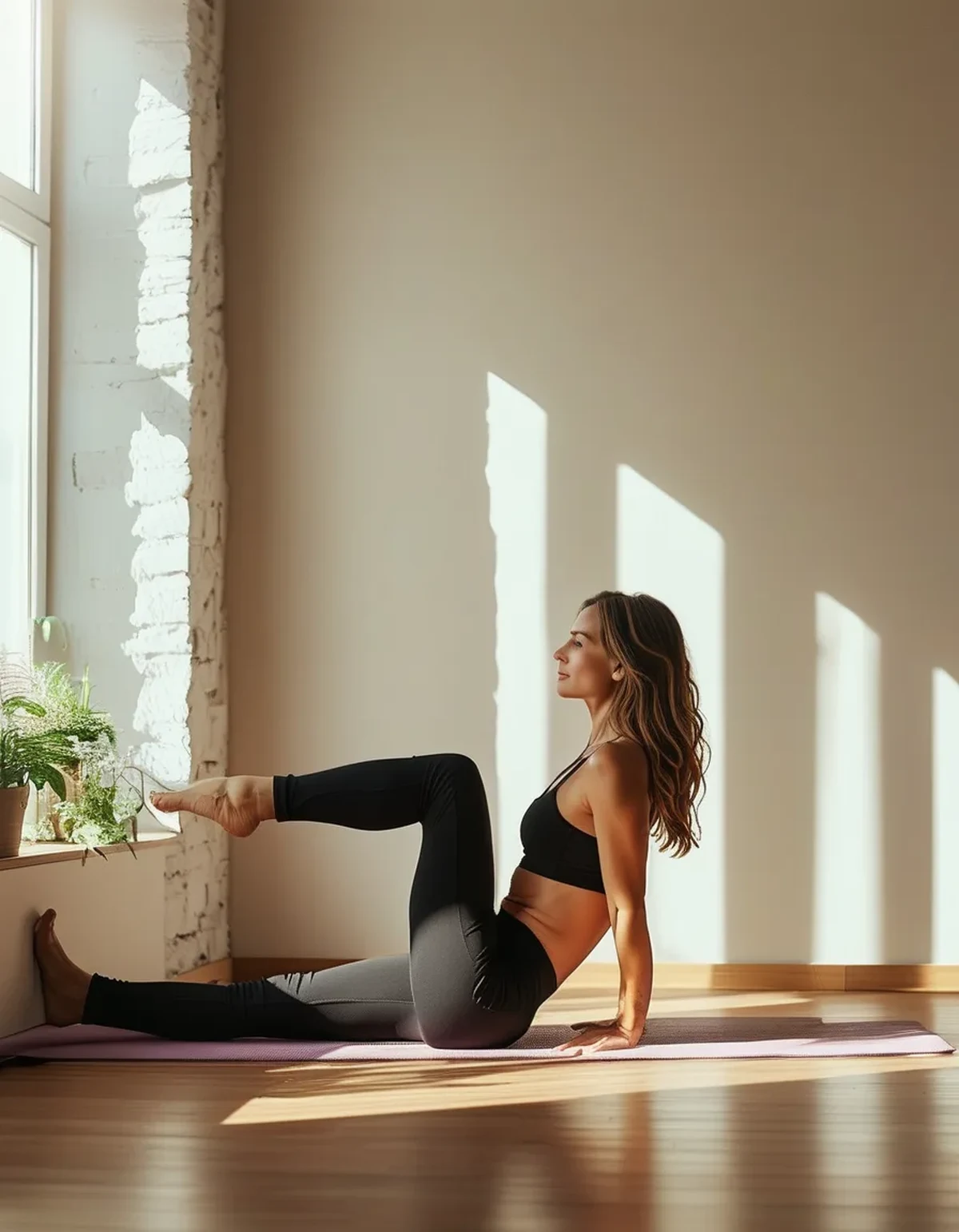
Why would morning wall pilates feel different from evening wall pilates?
Joint mobility and balance are typically somewhat reduced in the first 30-60 minutes after waking, a well-documented general pattern tied to overnight fluid shifts and lower baseline body temperature. This is exactly the window where the wall’s stability support is most genuinely useful — it compensates for balance that hasn’t fully come online yet, rather than being a training aid you’d equally need later in the day.
Is evening wall pilates actually more effective for flexibility work?
For many people, yes, modestly — body temperature and general tissue pliability tend to be higher later in the day compared to first thing in the morning, which can allow slightly deeper stretches and range of motion in wall-assisted poses. This doesn’t make evening sessions inherently better overall, just better suited specifically to flexibility-focused wall sequences.
Does using the wall change based on which time you’re practicing?
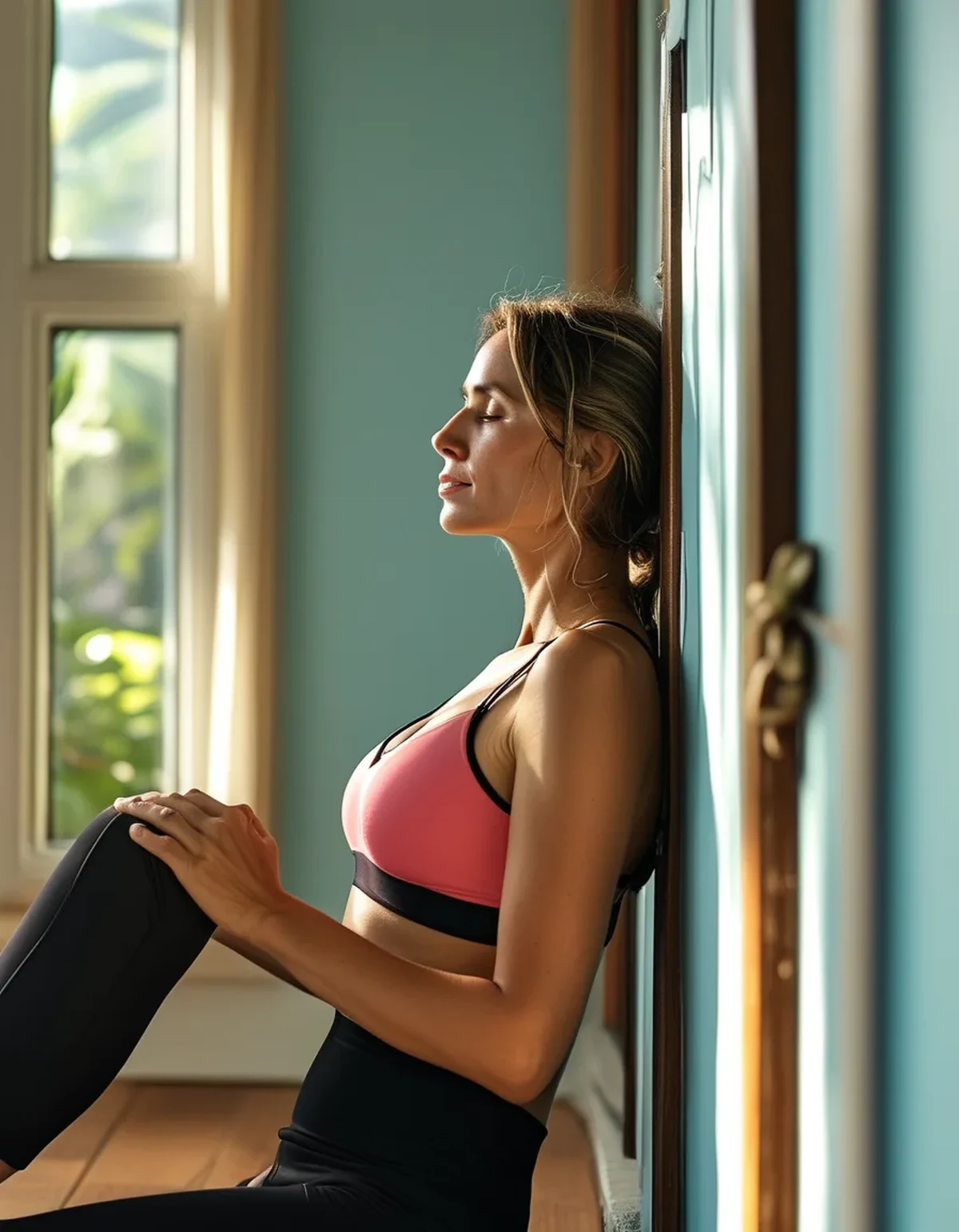
Somewhat — in a morning session, leaning more heavily on the wall for balance support through standing sequences is reasonable and expected, given reduced morning balance. In an evening session, some practitioners find they need less wall support for the same poses, since balance and mobility have both improved over the course of the day, and can use the wall more for alignment cues than pure stability.
Myth vs Fact: Wall Pilates Timing
Myth: Morning wall pilates burns more calories than evening sessions. Fact: Time of day has minimal direct effect on calorie burn for the same workout — the differences that matter are about how the session feels and performs, not raw calorie output.
Myth: You should never do wall pilates right before bed because it’s too energizing. Fact: Many wall pilates sequences, especially slower alignment-focused ones, are calming rather than energizing and work fine as part of a wind-down routine for many people.
Myth: Consistency in timing matters more than which time you pick. Fact: This one holds up well — picking a time you can actually stick with consistently matters more for long-term results than optimizing for morning versus evening specifically.
What actually matters more than time of day for results?
Consistency of practice outweighs optimal timing by a wide margin for most people’s actual results — a wall pilates practice done reliably three times a week in the evening will outperform an ‘ideal’ morning practice that gets skipped half the time. Choosing whichever time realistically fits your schedule and energy patterns, rather than chasing a theoretically optimal slot, is the more useful framework.
FAQ: Wall Pilates Timing Questions, Answered
Is it bad to switch between morning and evening practice depending on the day?
Not at all — adjusting wall support and pose depth slightly based on how your body feels that day is a reasonable, normal approach rather than something to avoid.
Should beginners start with morning or evening sessions specifically?
Evening is sometimes slightly easier for true beginners since baseline mobility is a bit higher, but either works fine as a starting point.
Does eating before a session matter more at one time of day than the other?
General pre-workout eating guidance (light meal or snack, enough time to digest) applies similarly regardless of morning or evening timing.
TL;DR:
- Morning sessions benefit from extra wall support since balance and mobility are typically lower right after waking
- Evening sessions allow slightly deeper stretches thanks to naturally higher body temperature and pliability
- How much you lean on the wall for stability versus alignment can shift depending on time of day
- Consistency of practice matters far more for actual results than optimizing for a specific time slot
Neither time wins outright — pick whichever fits your schedule reliably, and let the wall’s role adjust naturally to how your body feels that session.
See It in Motion
Keep Reading
This article is for general informational and styling purposes only. Fit, sizing, and product availability may vary.