The Shoulder Mistake That Quietly Undoes Most Wall Pilates Workouts
Quick Answer: Shrugging or rounding the shoulders forward while focusing on hip and core contact points is a common wall Pilates mistake that reduces upper-back engagement and can create neck tension — keeping shoulder blades gently drawn down and back, even during lower-body-focused moves, fixes it.
Most wall Pilates cues focus heavily on hip position, glute contact, and core engagement against the wall — which is exactly why the shoulders quietly drift into a shrugged, rounded position that nobody’s cueing you to fix, since all the attention is pointed elsewhere.

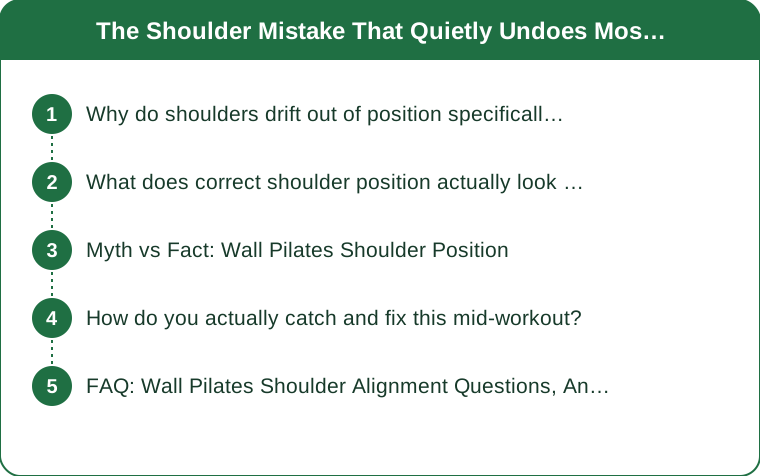
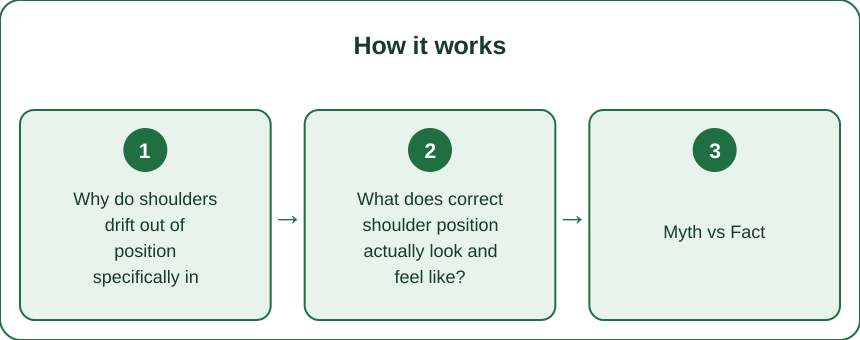
Why do shoulders drift out of position specifically in wall Pilates?
Because most cueing in wall Pilates is directed at the hips, glutes, and core contact points, leaving the upper body largely unmonitored by comparison. Without an active cue, shoulders naturally creep up toward the ears during effortful holds — a pattern called shoulder shrugging that happens across almost all forms of exercise when focus is elsewhere.
What does correct shoulder position actually look and feel like?
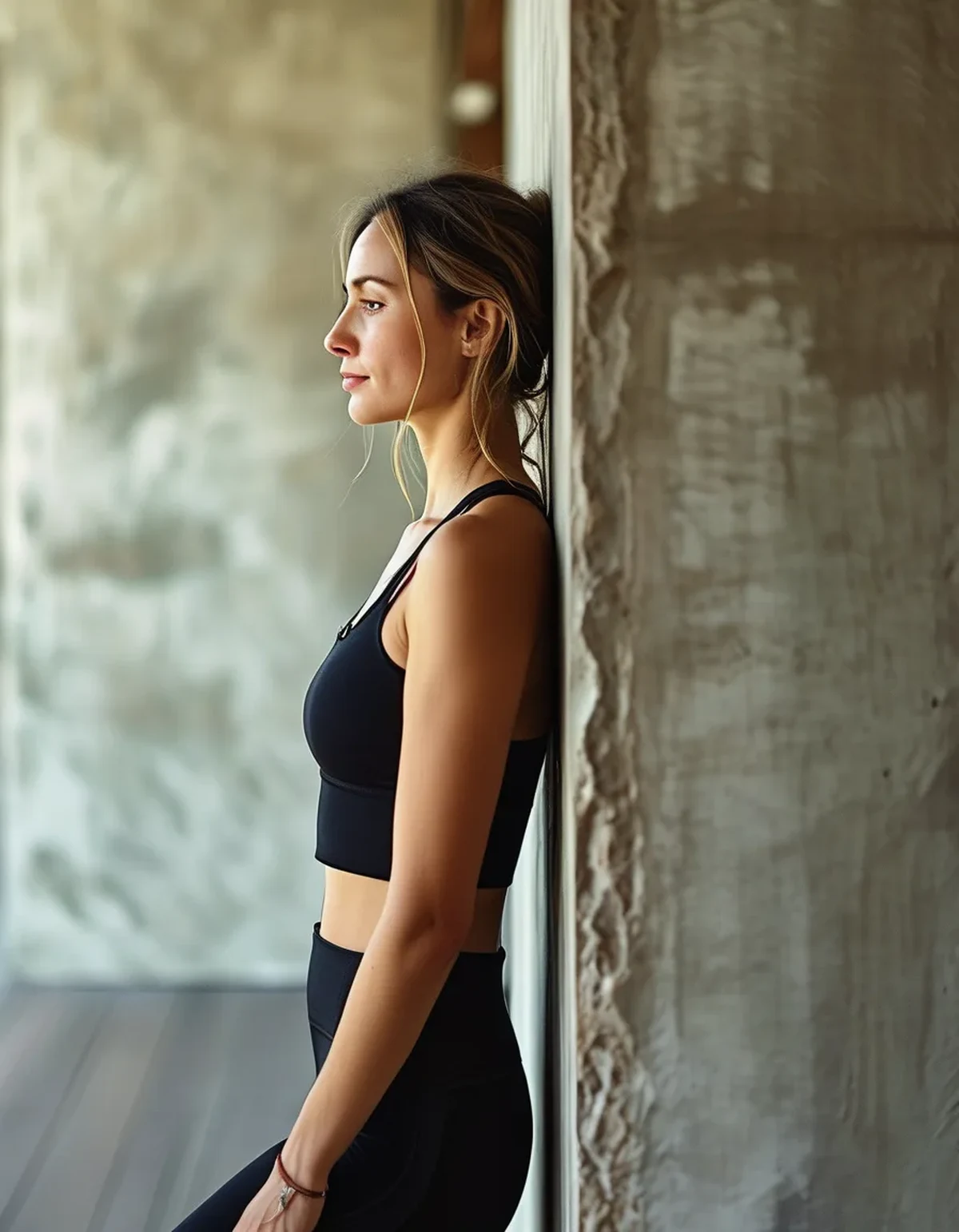
Shoulder blades gently drawn down and slightly back, away from the ears, with the chest open rather than rounded forward into the wall. This should feel like a small, low-effort adjustment — not a hard squeeze — held throughout the exercise, not just set once at the start and then forgotten.
Myth vs Fact: Wall Pilates Shoulder Position
Myth: Shoulder position doesn’t matter much since wall Pilates is mostly a lower-body and core practice. Fact: Poor shoulder position changes how force transfers through the torso during many wall-contact holds, and can create neck and upper-trap tension that shows up hours after the workout, disconnected from the actual cause.
Myth: A shrugged shoulder position means you’re working harder. Fact: It usually means the trapezius is compensating for a lack of active shoulder blade engagement, not that the exercise is more effective — it’s a form leak, not extra effort.
How do you actually catch and fix this mid-workout?
Do a shoulder check every few exercises, not just once at the start of the session — reset the blades down and back, relax the neck, and continue. A mirror, if available, makes this much easier to self-correct than relying on feel alone, especially early on before the correct position becomes familiar.
If neck or upper-trap tension consistently shows up after wall Pilates sessions, that’s a strong sign this specific pattern has been happening throughout, worth addressing directly rather than treating as an unrelated soreness.
FAQ: Wall Pilates Shoulder Alignment Questions, Answered
Is it normal for shoulders to fatigue during wall Pilates even though it’s not an upper-body workout?
A small amount of upper-back engagement is expected and fine; sharp fatigue or tension specifically in the neck and traps usually points to shrugging rather than normal effort.
Does this mistake affect the core benefit of wall Pilates too?
Yes, indirectly — shoulder shrugging often correlates with reduced core bracing, since both patterns tend to appear together when overall body awareness during a hold starts to lapse.
How long does it take to break the habit of shrugging during holds?
Most people notice significant improvement within 2-3 weeks of actively cueing shoulder position each session, once it becomes a habitual check rather than an afterthought.
TL;DR:
- Wall Pilates cueing focuses on hips and core, leaving shoulders to drift into a shrugged position unmonitored
- Correct position is shoulder blades gently down and back, held throughout — not a hard squeeze
- A shrugged shoulder isn’t extra effort, it’s the traps compensating for a form leak
- Check shoulder position every few exercises, not just once at the start
The hips might be perfectly placed against the wall — checking the shoulders closes the gap on a benefit most people are quietly leaving on the table.
See It in Motion
Seen here: UPF 50+ Racerback Yoga Tank Top — shop it on bubblelime.com
Keep Reading
This article is for general informational and styling purposes only. Fit, sizing, and product availability may vary.