Socks or Barefoot for Wall Pilates? It Depends on the Wall
Quick Answer: Barefoot gives the best proprioception and works well on matte, textured or painted-plaster walls. On gloss paint, tile or anything that has been recently cleaned, bare skin slips as soon as it warms and sweats, and grip socks with rubber dots hold far better. Choose by wall surface and room temperature rather than by rule, and keep both options within reach.
The answer changes between a bedroom wall and a bathroom wall in the same flat.
We have covered wall contact points, carpet versus hardwood floor slip and wall surface damage. This is the other half of the friction equation.
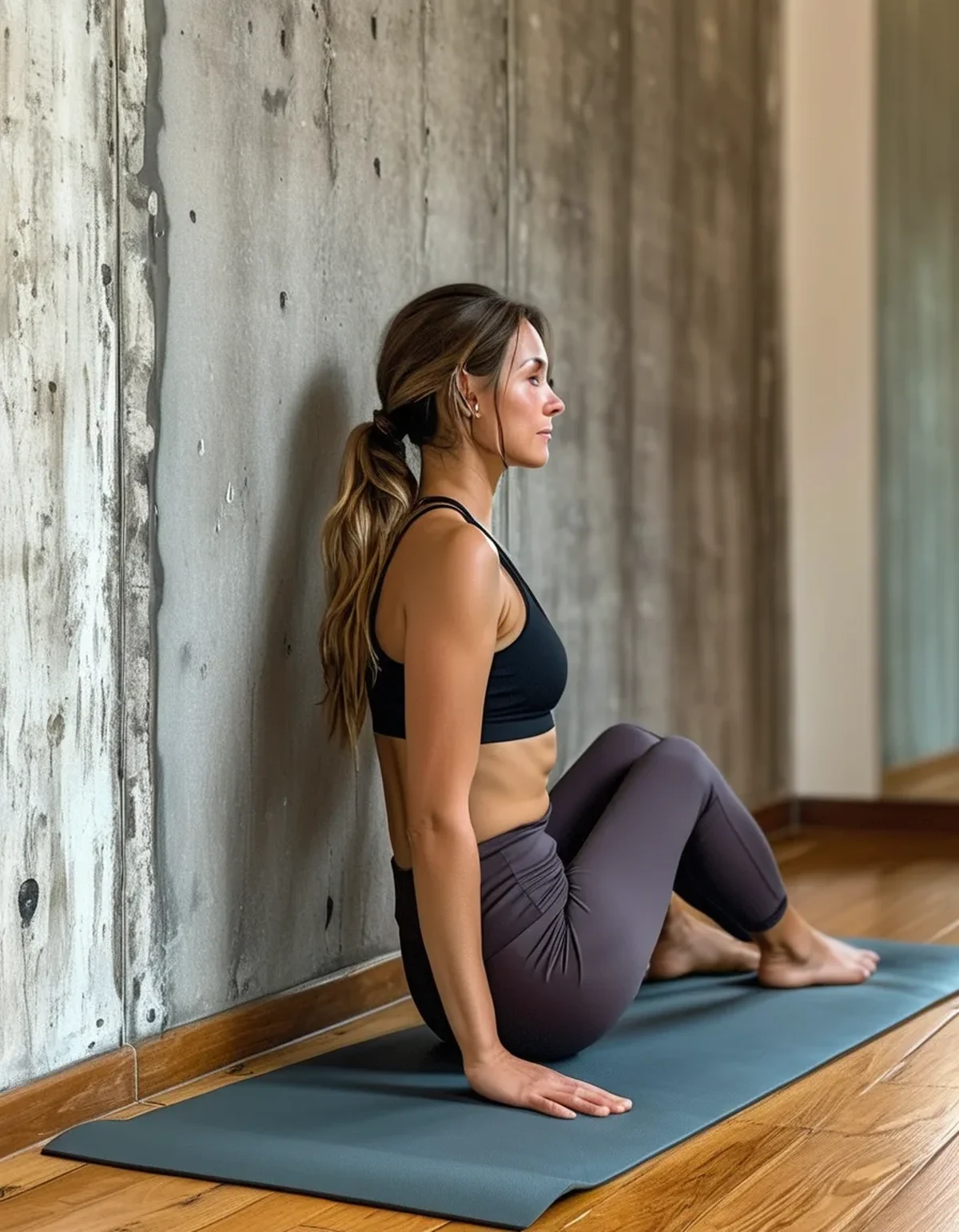
Why does barefoot slip on some walls and not others?
Skin grip depends on moisture, and it has a narrow optimum.
Slightly damp skin grips better than dry skin. A small amount of moisture increases adhesion between skin and a matte surface.
Beyond that point, grip collapses. Once there is enough sweat to form a continuous film, you are sliding on liquid rather than gripping through it.
Warm rooms cross that threshold quickly. Feet pressed against a wall during a two-minute hold heat up, sweat, and go from grippy to slippery mid-exercise.
Surface finish decides how much moisture it takes. Matte emulsion has microscopic texture that channels moisture away; gloss and satin paint do not.
Tile and gloss are the worst combination. Non-porous, smooth, and often cooler than the room, which encourages condensation on contact.
And cleaning products leave residue. A wall wiped down with a polish or a spray cleaner is dramatically more slippery for weeks afterwards, which catches people out after a cleaning day.
When do grip socks genuinely outperform bare feet?
More often than the barefoot orthodoxy suggests.
On any gloss, satin or tiled surface, silicone or rubber dots grip far better than skin, because they do not depend on moisture at all.
In warm rooms and during long holds, where sweat is going to build regardless of surface.
During bridge and leg press variations, where the whole exercise depends on the feet not migrating downward, and a slow slide changes the joint angles without you noticing.
For anyone with cold feet. Cold skin is drier and stiffer and grips worse, which is why autumn and winter sessions in a cool room feel less stable.
Full-sole grip socks beat dotted ones for wall work. Dotted socks are designed for floor grip with the dots under the ball and heel; wall work needs grip across the whole sole.
The trade-off is feedback. You lose some sense of exactly where the pressure is distributed, which matters for alignment work and matters less for strength holds.
5 Mistakes People Make With Wall Grip
Mistake one: using the same choice for every exercise. A held bridge and a slow leg slide have completely different grip demands. Switching mid-session is normal, not a failure.
Mistake two: pressing harder when you start to slip. More force into a slippery surface increases the slide, because the film of sweat spreads. Reset the foot instead.
Mistake three: doing wall work on a freshly cleaned wall. Spray cleaner residue is the most common cause of a sudden slip in a room that was fine last week.
Mistake four: ignoring the marks. Bare feet leave oil marks on paint; grip socks leave scuffs. Neither is a problem if you wipe the contact zone occasionally, and both look terrible after a month of not doing so.
Mistake five: choosing footwear before checking the wall temperature. A north-facing exterior wall in autumn is cold enough to condense moisture from warm feet, which is a slip risk that has nothing to do with how hard you are working.
And the one that causes actual injuries: slipping during a loaded hold, particularly a single-leg bridge, drops the pelvis suddenly. If you are unsure of the surface, test with a short unloaded hold before committing to a long one. This is general information, not medical advice.
How to set up for reliable grip
Six adjustments that make the choice straightforward.
Test the wall cold. Press a bare foot against it and try to slide it downward with moderate force. If it moves easily when dry, it will move much more easily when warm.
Wipe the contact zone with a damp cloth and let it dry before a session, particularly if the wall has been cleaned with anything sprayed.
Keep grip socks within arm’s reach of the mat. The decision only gets made if the alternative is available without getting up.
Use the lower part of the wall where possible. Skirting-height contact is usually against a section that has been painted more recently and cleaned less often.
Add a thin mat or towel against the wall for slide-based exercises where you actively want low friction, rather than fighting the surface in both directions.
And check foot position rather than force when you slip. Feet too high on the wall creates a downward vector that no amount of grip will hold; feet at hip height or slightly above hold much more easily.
One note on walls themselves: repeated foot pressure marks paint, and matte emulsion marks fastest. A removable adhesive mat or a large piece of cardboard taped in place protects a rented wall and adds texture, which usually improves grip as well.
FAQ: Wall Pilates Grip Questions, Answered
Should I do wall pilates barefoot or in socks?
Barefoot on matte painted or textured walls, where skin grips well and you get the best feedback. Grip socks on gloss paint, satin finish or tile, and in warm rooms during long holds, where sweat turns bare skin into the slippery option.
Why do my feet slide down the wall halfway through a hold?
Usually sweat. Skin grip peaks with a small amount of moisture and collapses once there is a continuous film. Warm rooms and long holds cross that point quickly. Reset the foot rather than pressing harder, which spreads the film.
Do grip socks damage paint?
Less than bare feet do, in general. Skin leaves oil marks that build up over weeks; rubber dots leave occasional scuffs that wipe off. Either way, wiping the contact zone every couple of weeks keeps the wall looking normal.
TL;DR:
- Barefoot works on matte and textured walls, and slips on gloss, satin and tile.
- Skin grip peaks with slight moisture and collapses once sweat forms a film.
- Grip socks do not depend on moisture, which makes them better for warm rooms and long holds.
- Test the wall cold, avoid freshly cleaned surfaces, and keep both options next to the mat.
The right answer is not barefoot or socks. It is whichever one matches the wall you actually have.
See It in Motion
Seen here: UPF 50+ Racerback Yoga Tank Top — shop it on bubblelime.com
Keep Reading
This article is for general informational and styling purposes only. Fit, sizing, and product availability may vary.