The Wall Damage Wall Pilates Routines Don't Warn You About (And the Easy Fix)
Quick Answer: Repeated foot, hand, and hip pressure against the same wall section during wall pilates can gradually leave scuff marks, paint wear, or small dents, especially in high-friction moves like wall sits or leg presses — a simple protective mat, rug, or furniture pad placed against the contact zone before starting prevents nearly all of it.
Wall pilates routines rarely mention wall care, focusing entirely on the workout itself, but anyone doing this regularly in a rented space or a freshly painted room notices the marks eventually.
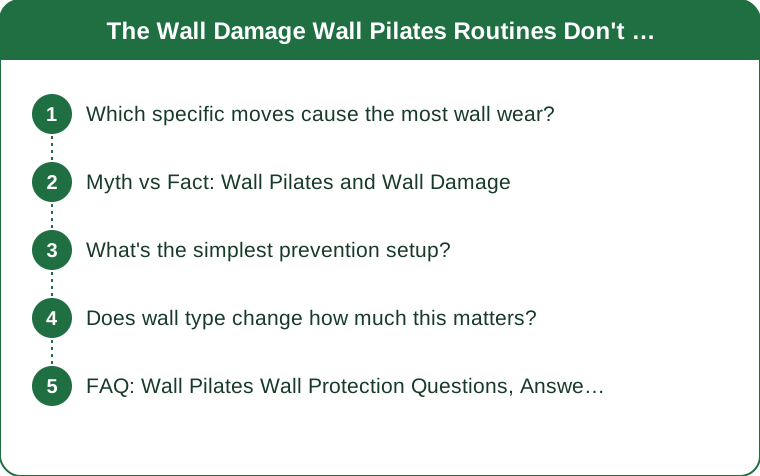
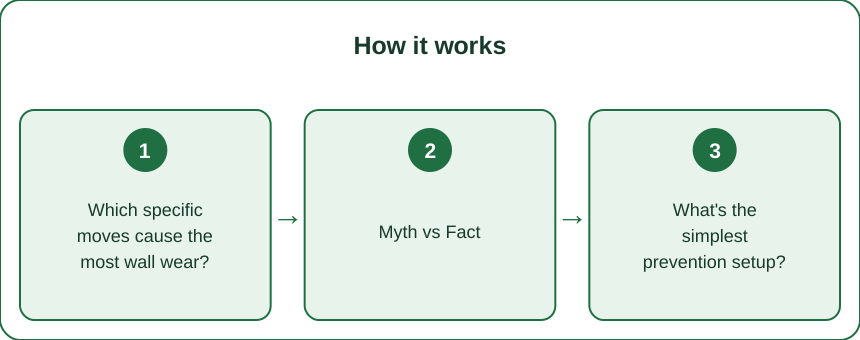
Which specific moves cause the most wall wear?
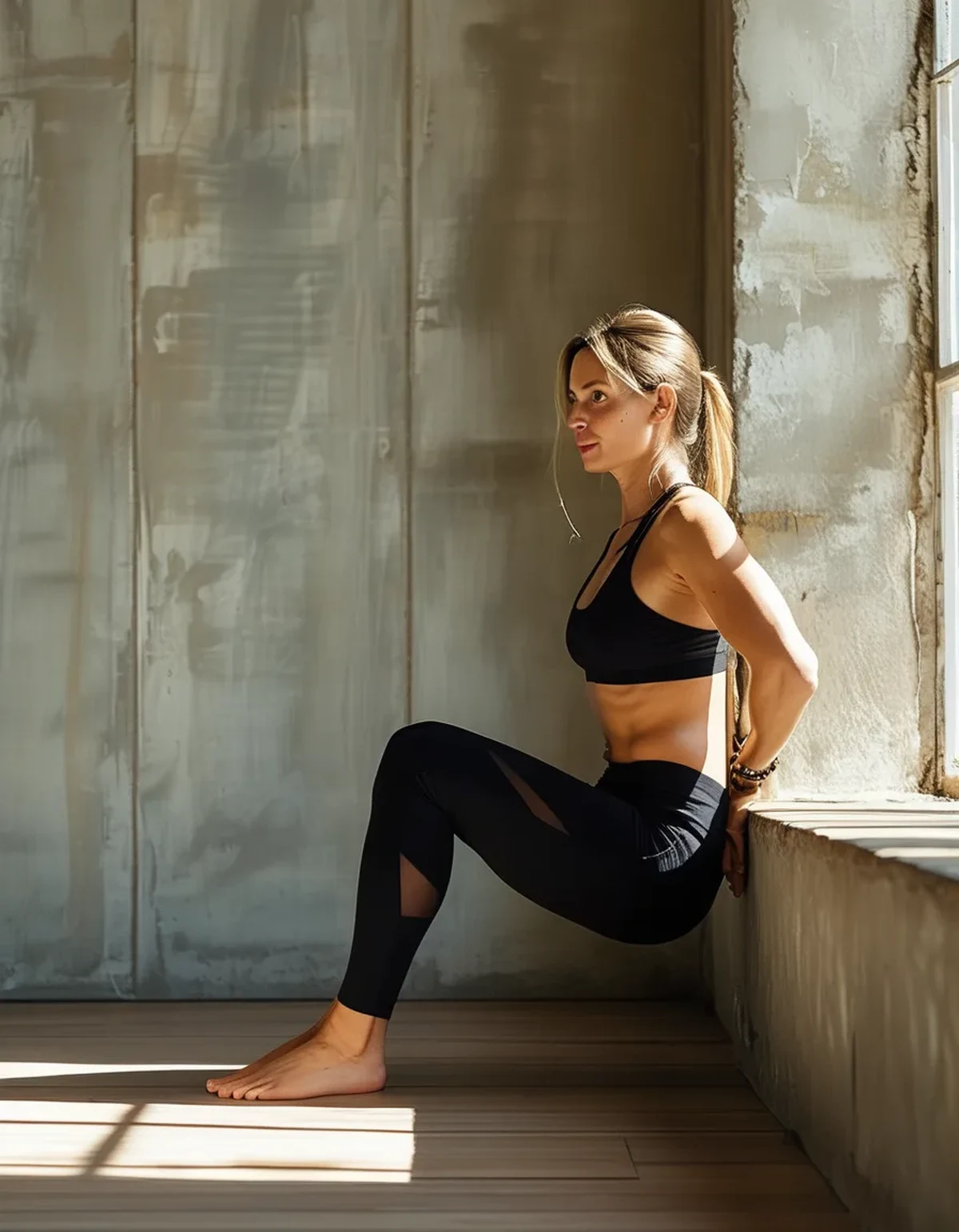
Wall sits, leg presses, and any move involving repeated sliding foot contact against the wall create the most friction-based wear, since sustained pressure combined with small foot adjustments during a hold is what actually scuffs paint, more than a single brief touch would.
Myth vs Fact: Wall Pilates and Wall Damage
Myth: Only bare feet or shoes cause wall marks. Fact: Sweat and body oil transfer from skin contact during hand or shoulder-blade positions can leave marks just as easily as feet, especially over repeated sessions.
Myth: A textured or matte wall finish is safe from this. Fact: Matte and textured finishes often show scuff marks more visibly than glossy finishes, since they don’t wipe clean as easily.
Myth: This is only a concern in rented spaces. Fact: Even owned homes see this on freshly painted walls, where the paint hasn’t fully cured and hardened yet, making it more vulnerable to scuffing in the first few weeks.
What’s the simplest prevention setup?
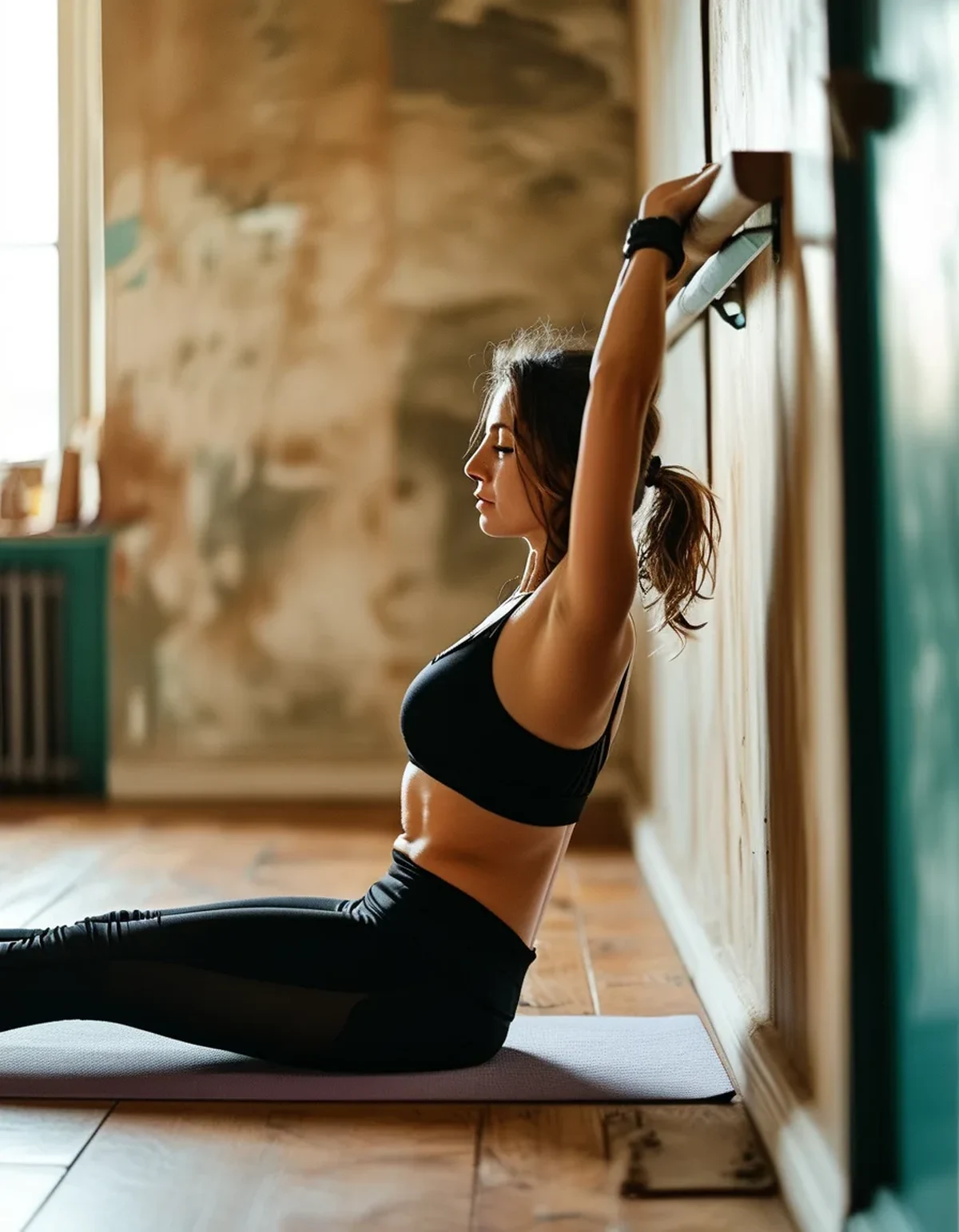
A thin corner or wall-mounted furniture pad, or simply a folded towel or yoga mat pressed against the contact zone before starting, absorbs the friction that would otherwise transfer to the paint. This takes under a minute to set up and works for essentially any wall pilates routine regardless of which specific moves are included.
Does wall type change how much this matters?
Yes — drywall with standard latex paint scuffs more easily than plaster or a wall with a durable enamel finish, meaning renters and anyone in a newer drywall-constructed home should be more deliberate about protection than someone with older plaster walls or already-durable paint.
FAQ: Wall Pilates Wall Protection Questions, Answered
Can existing scuff marks from wall pilates actually be cleaned off?
Often yes, with a magic eraser sponge or diluted mild soap on latex paint, though repeated scuffing over a longer period may require a paint touch-up rather than just cleaning.
Is a yoga mat against the wall enough protection, or is something more durable needed?
For most home routines, a folded mat or towel is enough; for very frequent, sweat-heavy sessions, a wipeable furniture pad designed for wall protection holds up better over time.
Does this matter for a wall pilates routine done against a door instead of a wall?
Yes, and arguably more so, since doors often have thinner, more easily marked paint and hardware nearby that can also get bumped during a session.
TL;DR:
- Wall sits and leg presses create the most friction-based wear from sustained, sliding contact
- Matte and textured paint finishes show scuff marks more visibly than glossy ones
- A folded towel, mat, or furniture pad against the contact zone prevents nearly all of it
- Standard drywall and latex paint scuff more easily than plaster or durable enamel finishes
A one-minute setup before each session protects your walls without changing anything about the workout itself.
See It in Motion
Keep Reading
This article is for general informational and styling purposes only. Fit, sizing, and product availability may vary.